June 20, 2022 – There’s something special about a British railway station on a Sunday. Travelers milling about, some so obnoxiously early that their train isn’t even displayed yet, others so abhorrently late that one misstep between the gate and the platform will leave them watching their train pull off into the countryside. It attracts all kinds of people – the old and young reading the same newspapers; the former in print, the latter on their phone. Football ultras sitting alongside artists and musicians both heading to London for their own form of Sunday worship. Young families setting off on memory-making adventures and adults reuniting with anxiously waiting elderly parents near the taxi queue.
The trains themselves serve as a mobile circus of sorts. While searching for a seat, one passes group of gents, somewhere between age 17 and 70, in Arsenal jerseys chatting loudly over a cans of Old Speckled Hen at 11:16 AM; and at the table across from them, a mirror image of lads doing the same adorned with Tottenham kit. Behind them are students desperately scribbling away on paper or clacking away on a laptop in the small space they’ve been allotted; internally fuming that the footballers have taken up the coveted table space so close to exams. You soon realize your worst fear: there are no seats on your train. You will be standing in between the cars, listening to conversation between two people that is so loud, you begin to think that they want you to hear them through your AirPods on one side of you and a Londoner silently reflecting on the morning edition of the Times on the other.
In the end, it seems as if the British train is one of the last beacons of egalitarianism in the western world (if you exclude the pricks who sit in first class). People get on. People get off. Everyone suffers equally if the train is delayed and everyone if rewarded if service is on time or early. It’s a place where you can ask a strangers for sections of their paper without a look that says “why are you talking to me?” in response. Perhaps society writ large could learn something, if we all stopped and looked around at our fellow passengers at the station or on the train.
October 31, 2021 -October 16th was a very special day in Oxford: Marticulation Day. Matriculation at Oxford and Cambridge has a slightly different meaning than the way the term is used at US universities, where often it is synonymous with enrollment and often occurs once a student pays their initial deposit. However, matriculation at Oxford is a centuries-old tradition where new students formally join and become life-long members of the university.
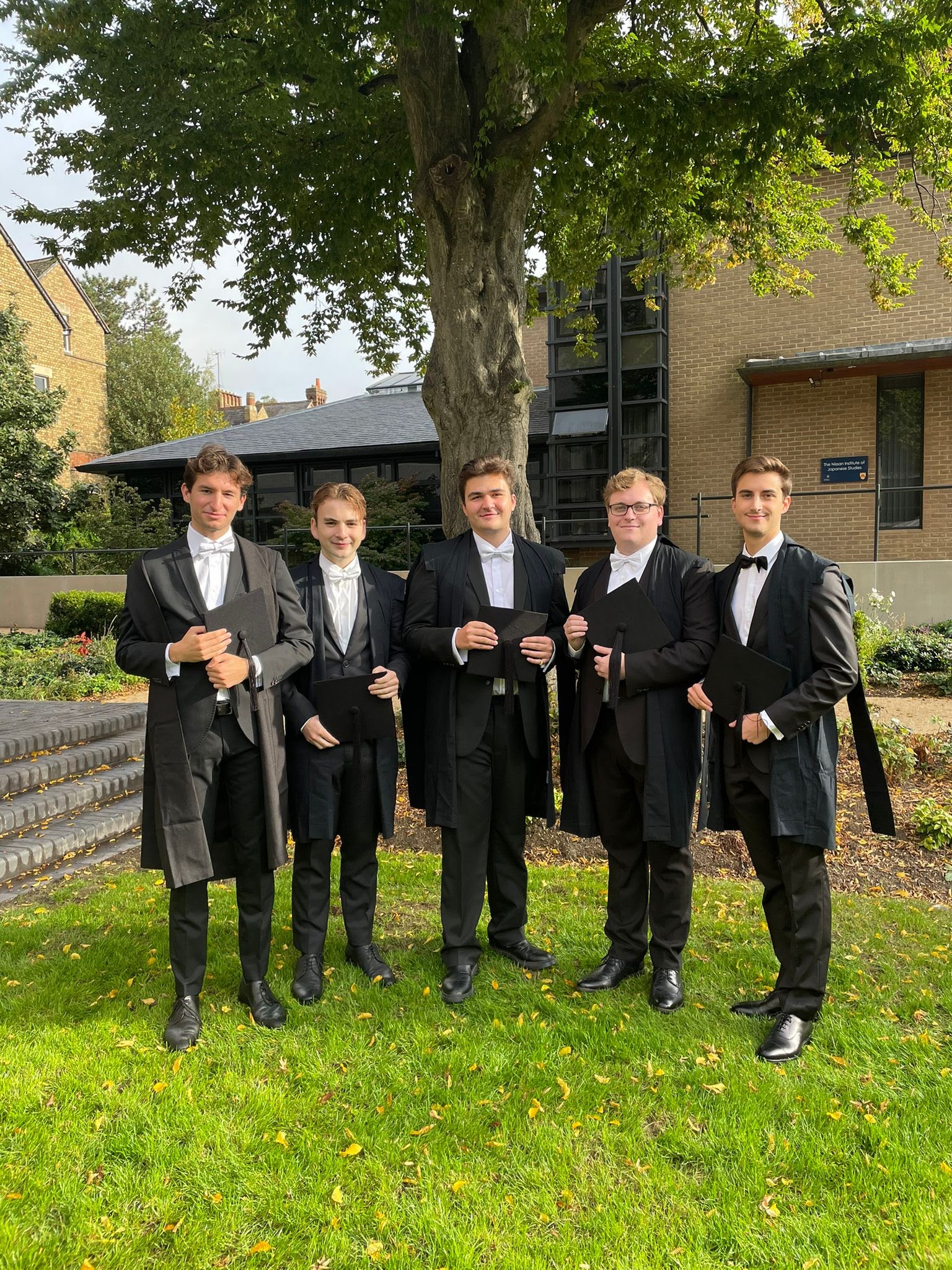
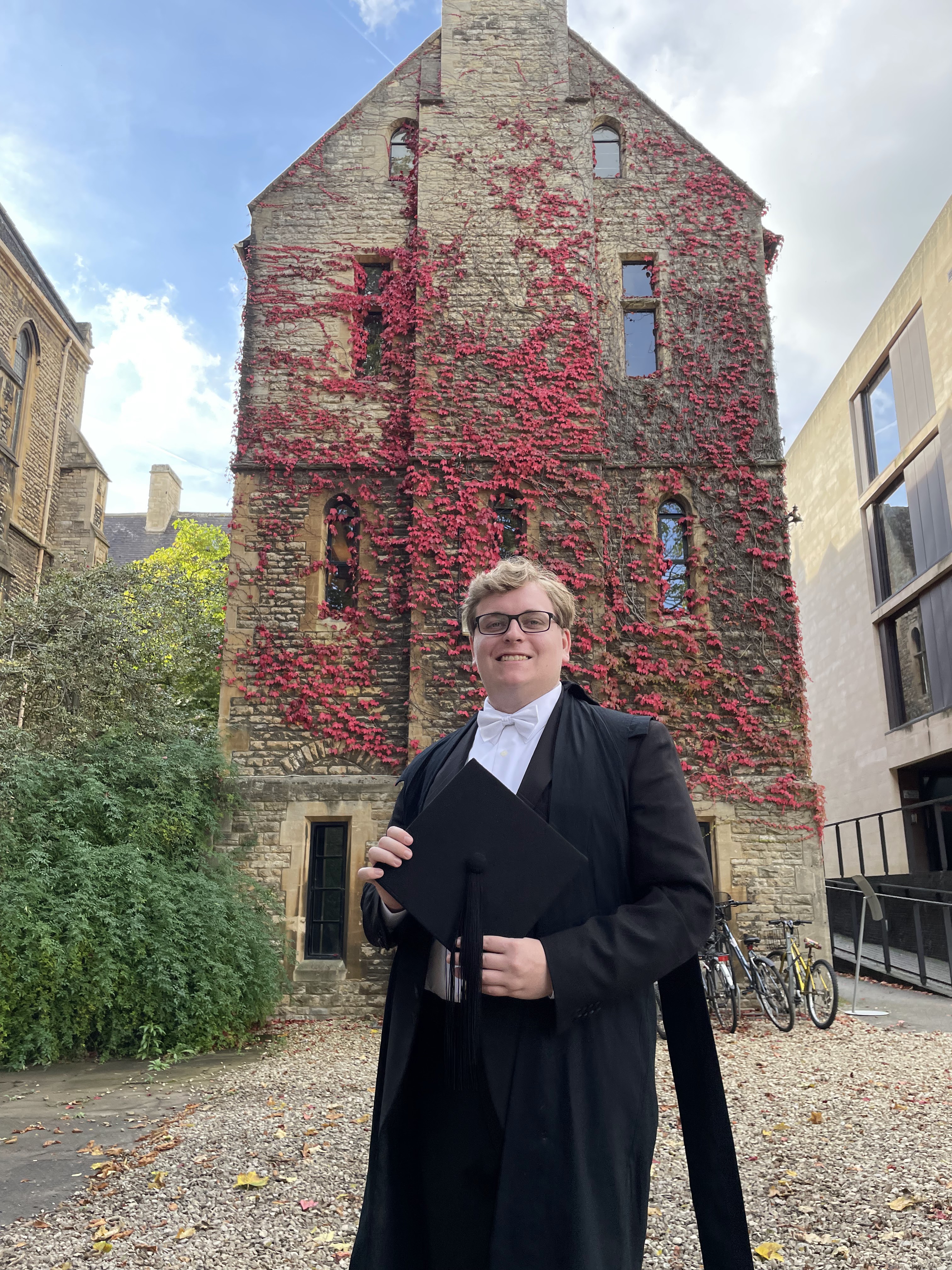
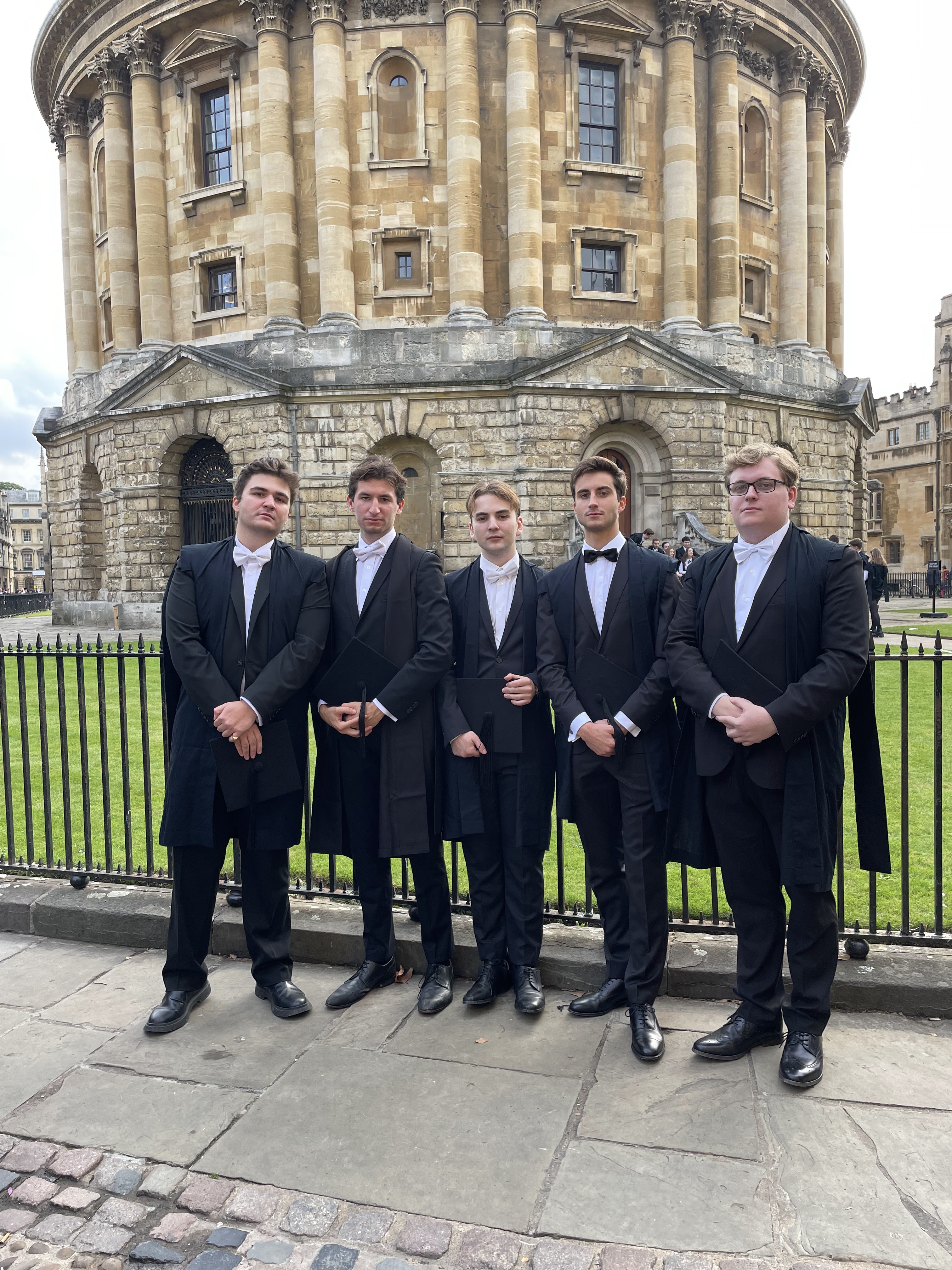
A strict requirement is that students wear sub fusc under a gown whose length and features indicate the student’s level of study. The mortorboard is also carried as part of this, but the cap is never to be worn on one’s head (superstition says that students who wear their cap before graduation will not finish their degree). The sub fusc consists of black formal wear (typically a black suit (jacket optional) for men, traditionally worn with a white bow tie). Sub fusc is taken quite seriously at Oxford; if one’s pants/socks/shoes are not dark enough, they are not in line with sub fusc requirements and cannot be worn.
Traditional Graduate dress for Matriculation
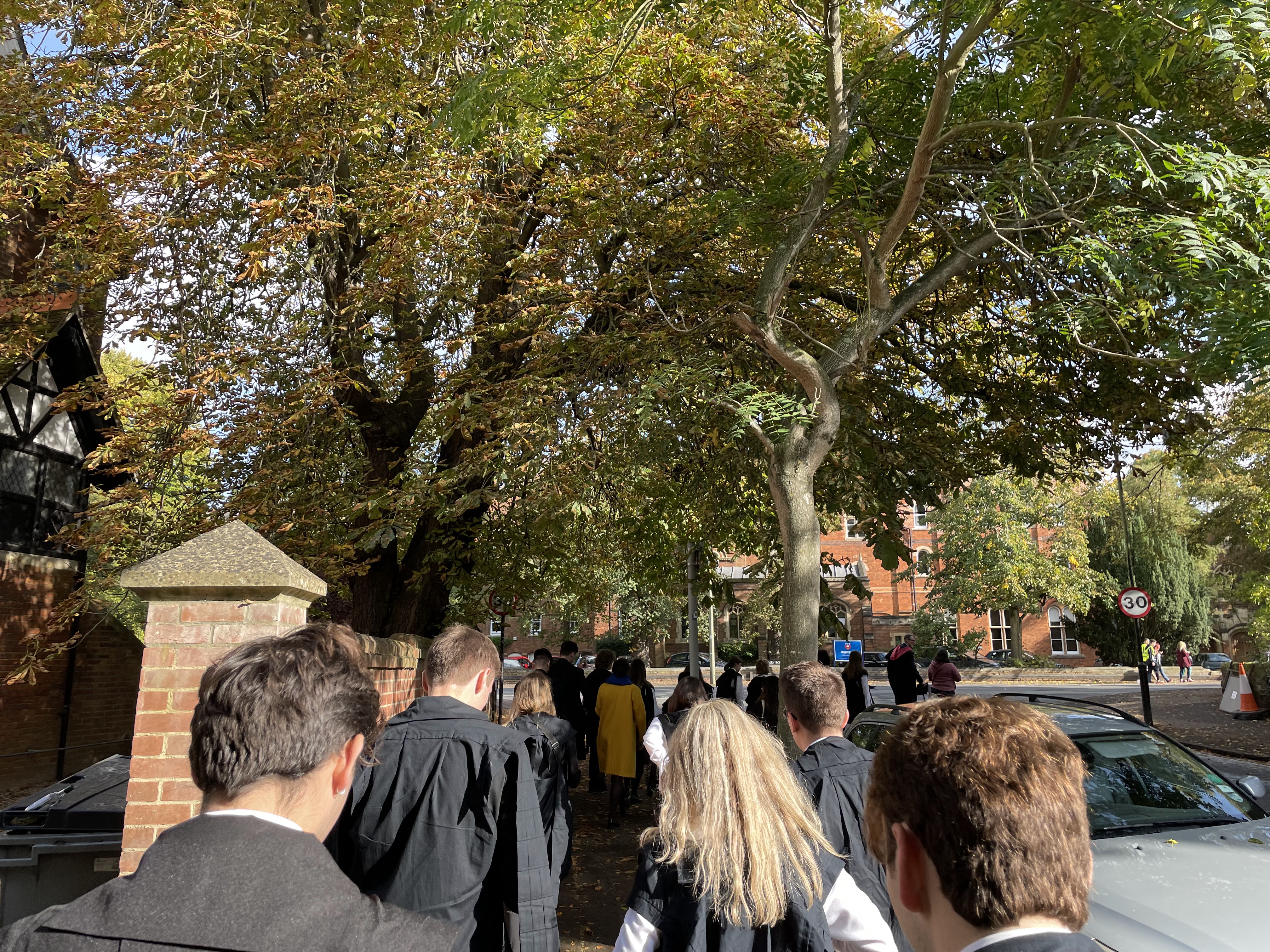
The morning of matriculation went a lot like this: – 8:30 AM – Wake up and get ready – 9:30 AM – Check in at College, get sub fusc approved – 9:30 – 11:15 AM – Get professional photo taken, take photos with friends, coffee – 11:15 AM – Line up for College photo – 12:30 PM – Lunch – 1:45 PM – March to Sheldonian Theatre for ceremony
Matriculation is the best day for pictures
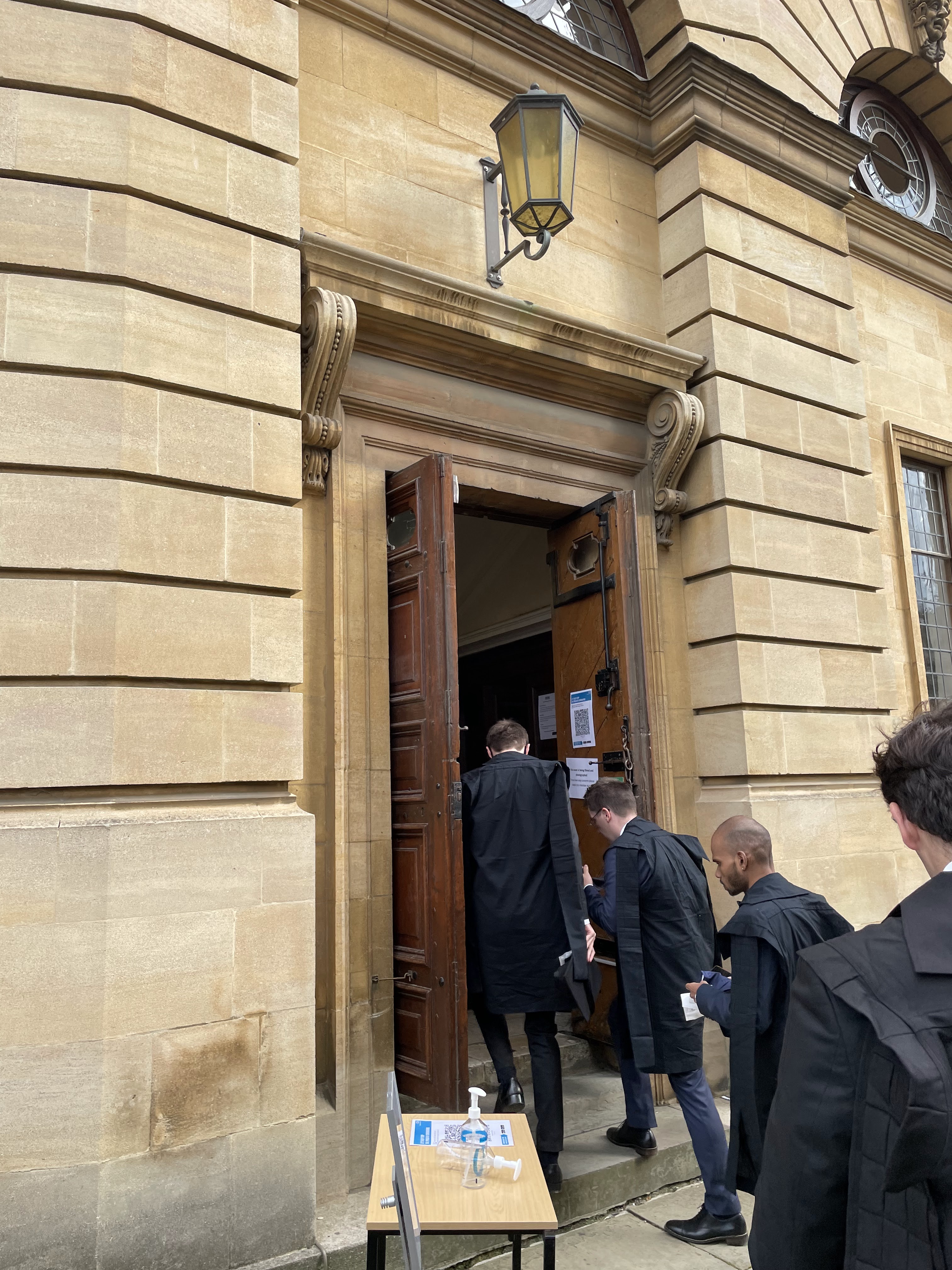
Walking to the Sheldonian
Walking into the Sheldonian
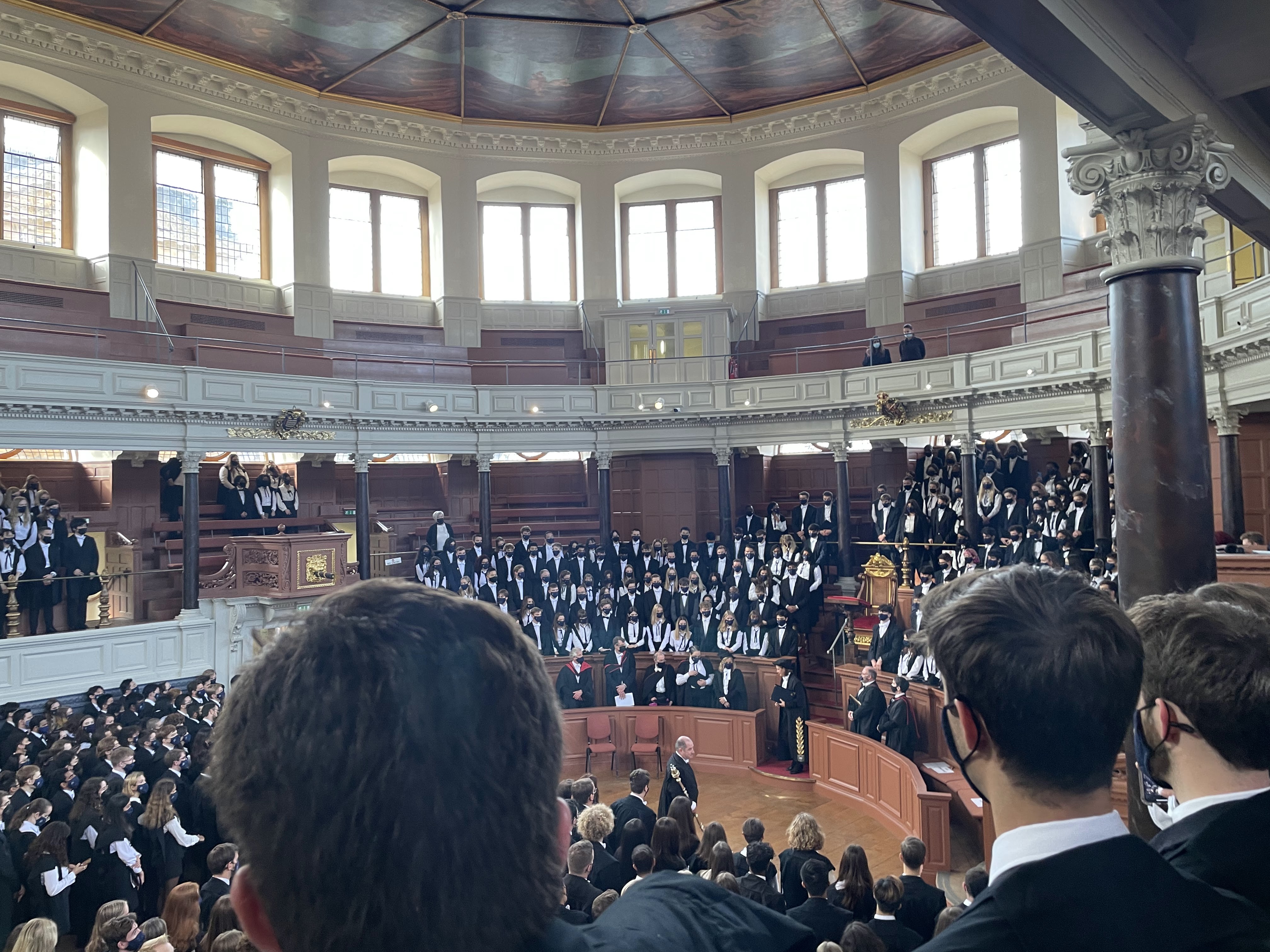
The actual ceremony takes place in the Sheldonian Theatre, a beautiful theatre designed by architect Christopher Wren, who designed many of the notable buildings in Oxford and Cambridge. A small theatre, they pack as many students as possible in for their 15 minute ceremony before quickly rushing them out only to do it all over again. The ceremony consists of the Vice-Chancellor of Oxford reading a small speech in latin:
Scitote vos in Matriculam Universitatis hodie relatos esse, et ad observandum omnia Statuta istius Universitatis, quantum ad vos spectent, teneri. “Know that you are today added to the Roll of the University and bound to obey all the statutes of this University so far as they apply to you.”
The interior of the Sheldonian for Matriculation
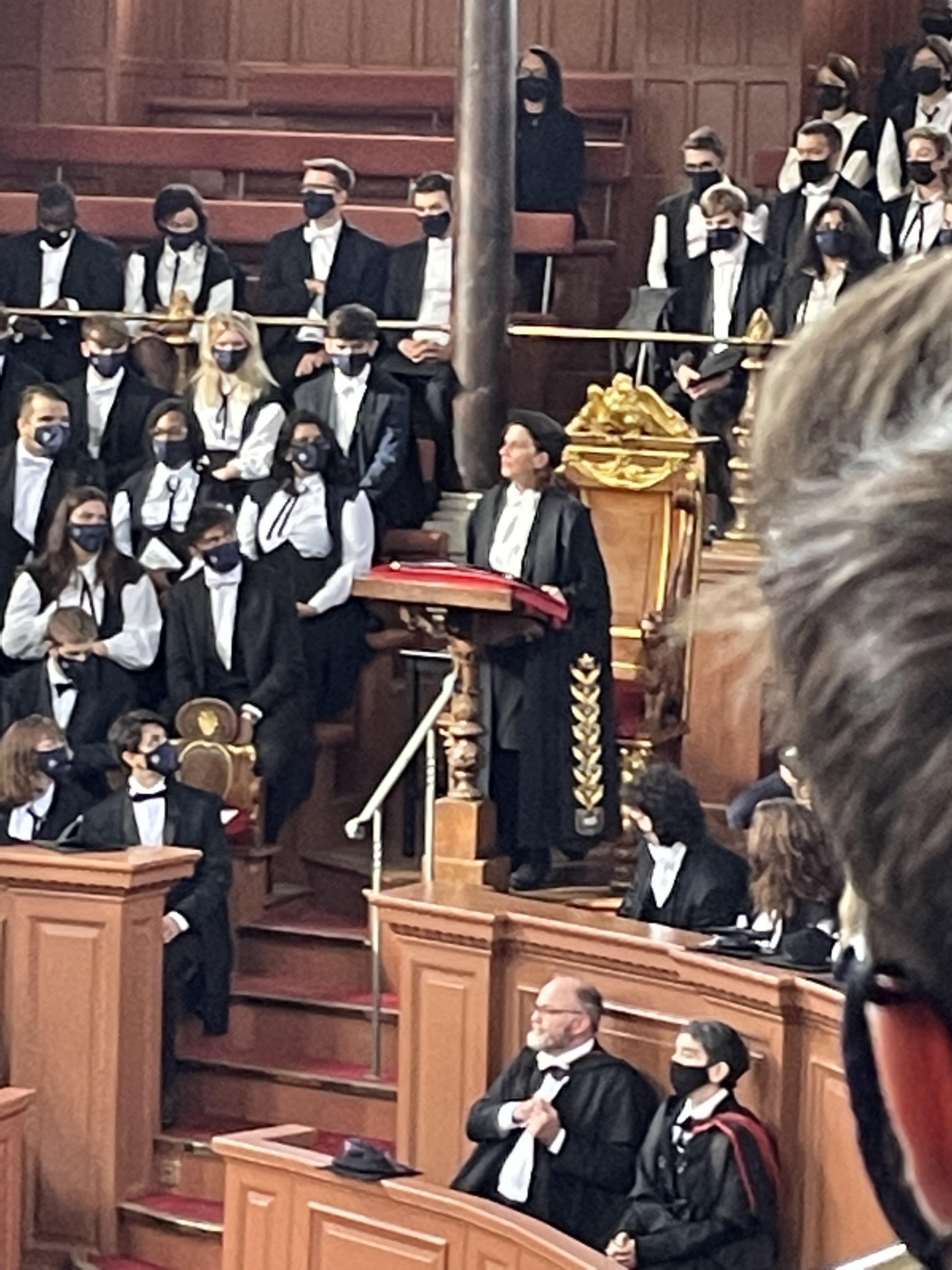
Oxford’s Vice-Chancellor, Professor Louise Richardson
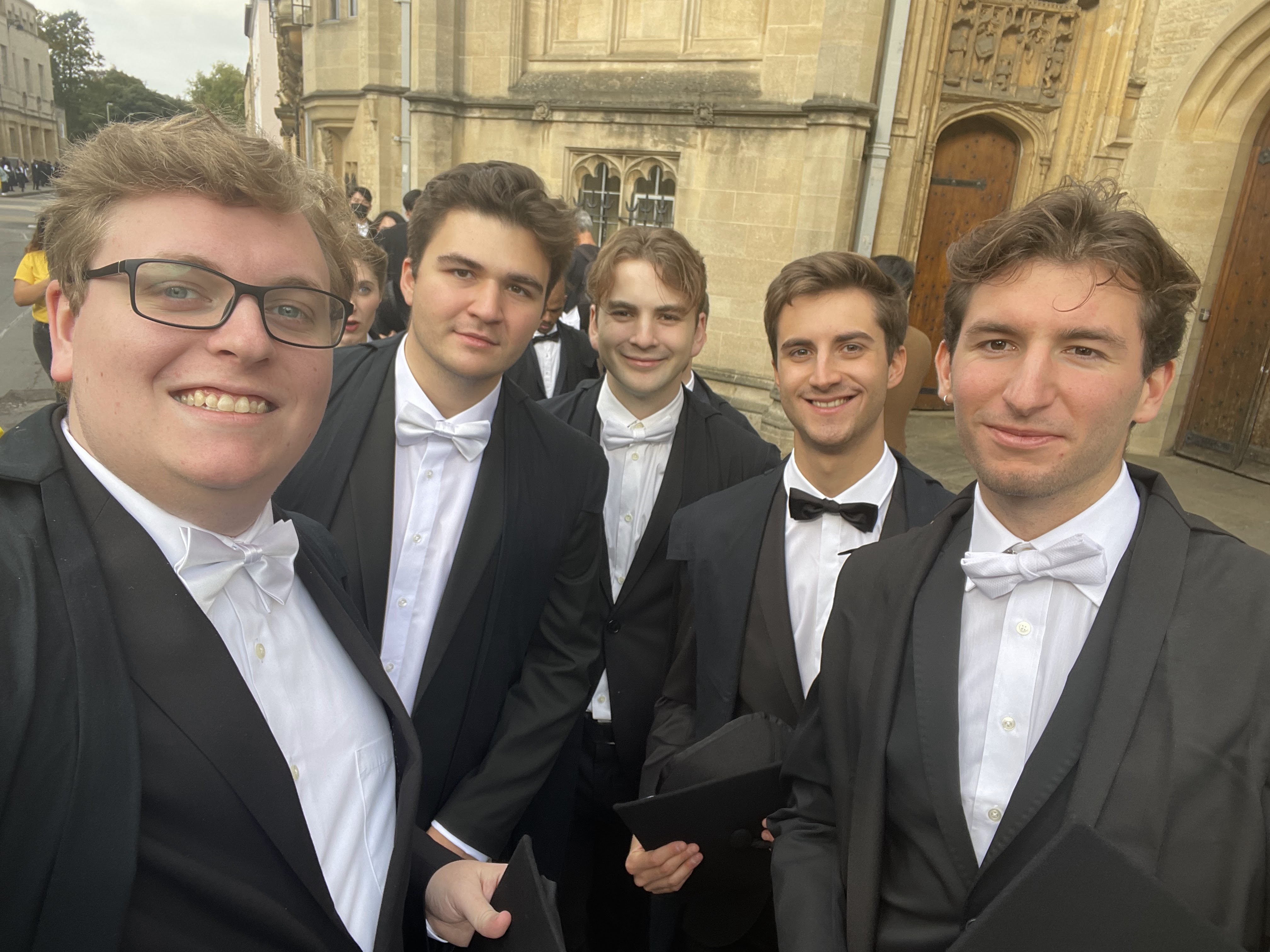
And, of course, more photos must follow the ceremony
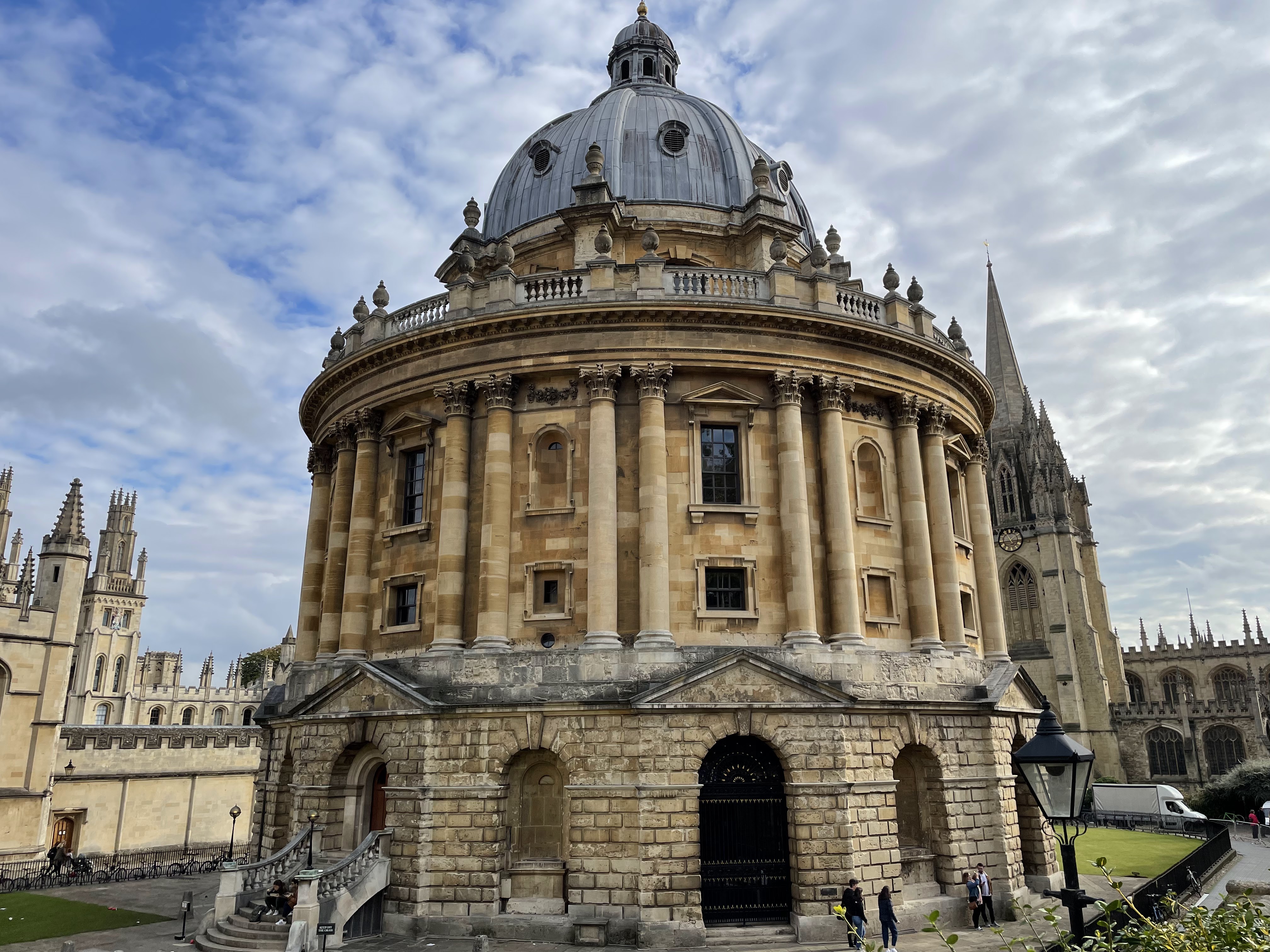
The Rad Cam is the perfect place for photos
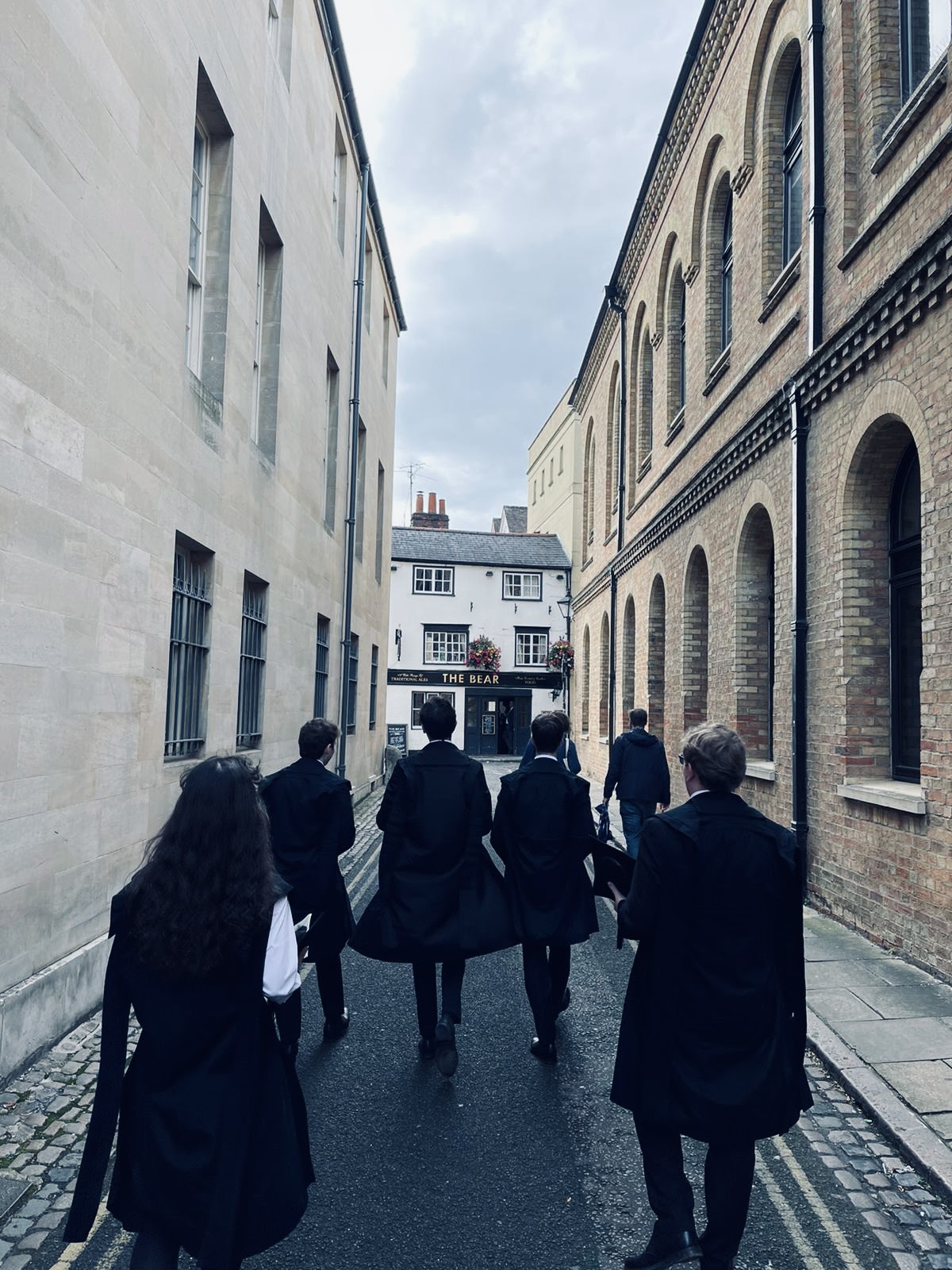
My friends and I heading to a post-ceremony celebration at The Bear Inn, Oxford’s oldest pub founded in 1242.
Bonus story: Matriculation Day means Oxford’s city centre is swarmed with tourists taking photos of all the students in traditional academic dress. I’m sure my friends and I are now part of many a persons photo reels for eternity. However, one photo shoot sttod out to us. Just before the above photo was taken, a photographer asked us to pose with a couple who was getting their engagement photos done. At one point, the photographer asked us to put our mortarboards on, but before we could tell him no, another passerby quickly corrected him: “they can’t! They won’t graduate!” My friends and I still joke about how now we will forever be in the engagement photos of a couple we will never meet again.
October 31, 2021 – It’s been an amazing first month in Oxford. There’s so much to report on I may have to split it between two posts! Here are some highlights of the past few weeks.
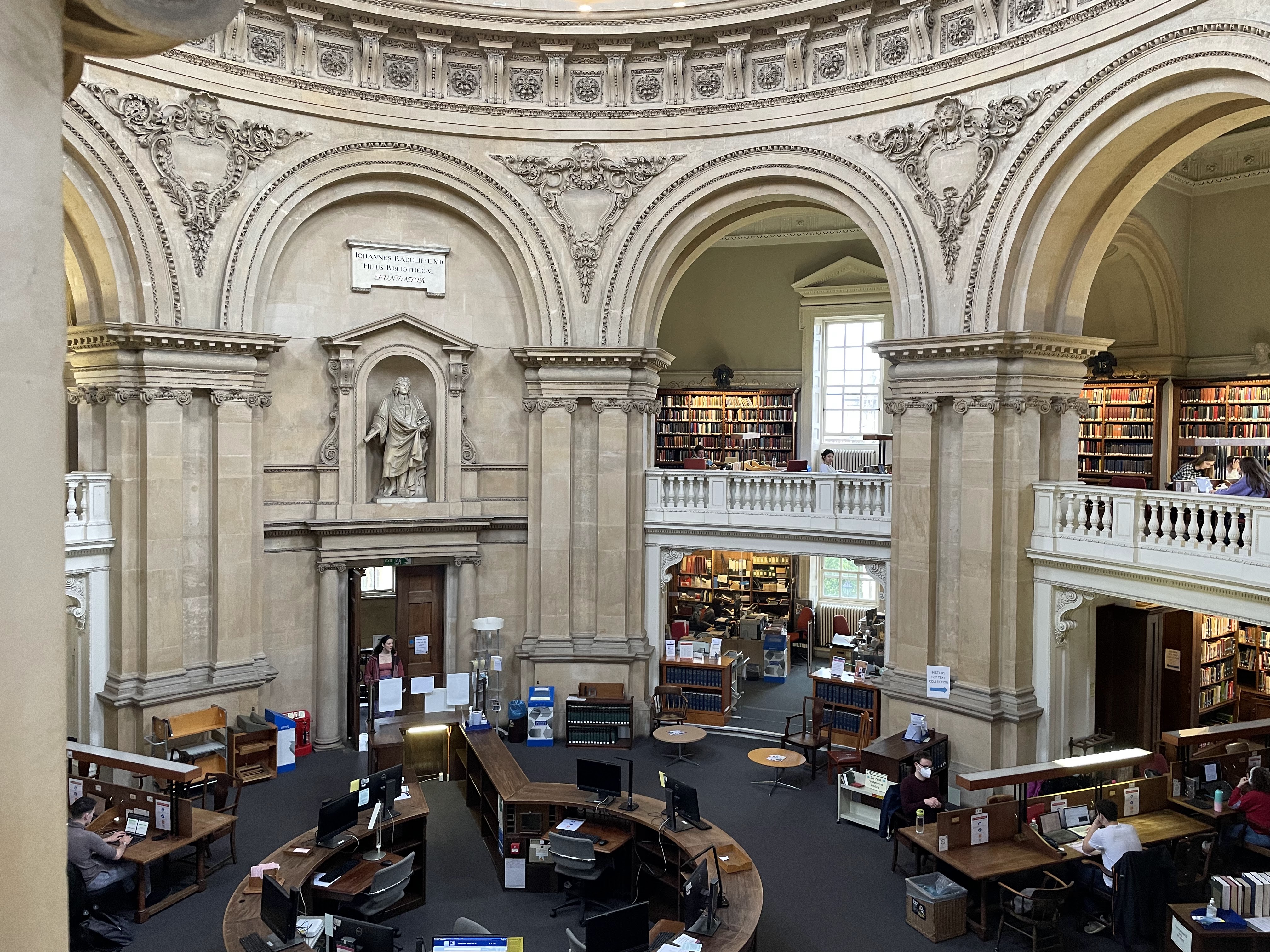
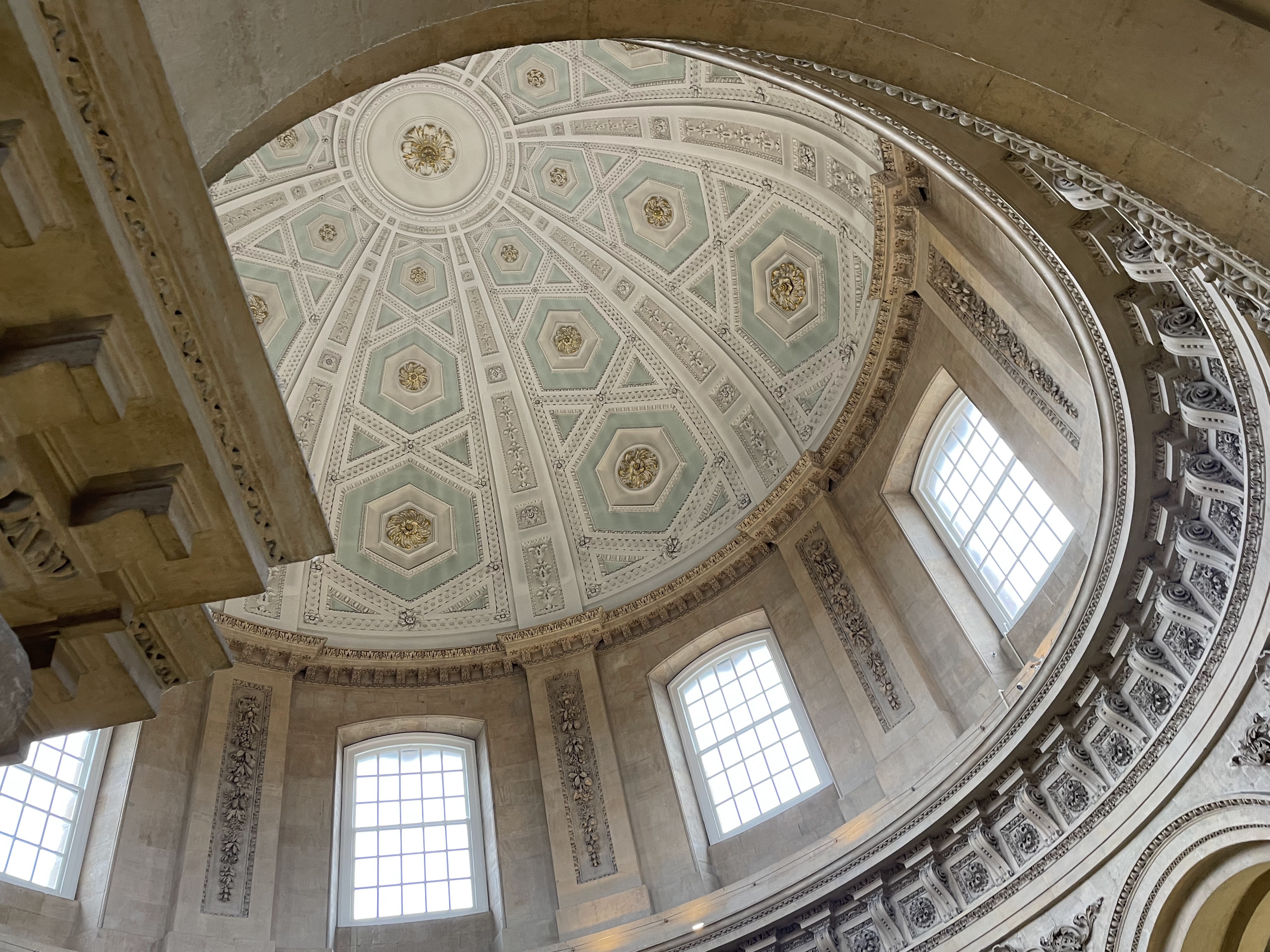
The university’s stunning architecture looms over you while walking around the city. Nowhere is more iconic than the Radcliffe Camera, perhaps the most recognizable of the Bodlein Libraries. Opened in 1749, many describe it as the most magnificent structure in all of Oxford.
The Radcliffe Camera from Exeter College, with All Soul’s College (left) and the University Church (right) in the background
The Upper Camera reading room
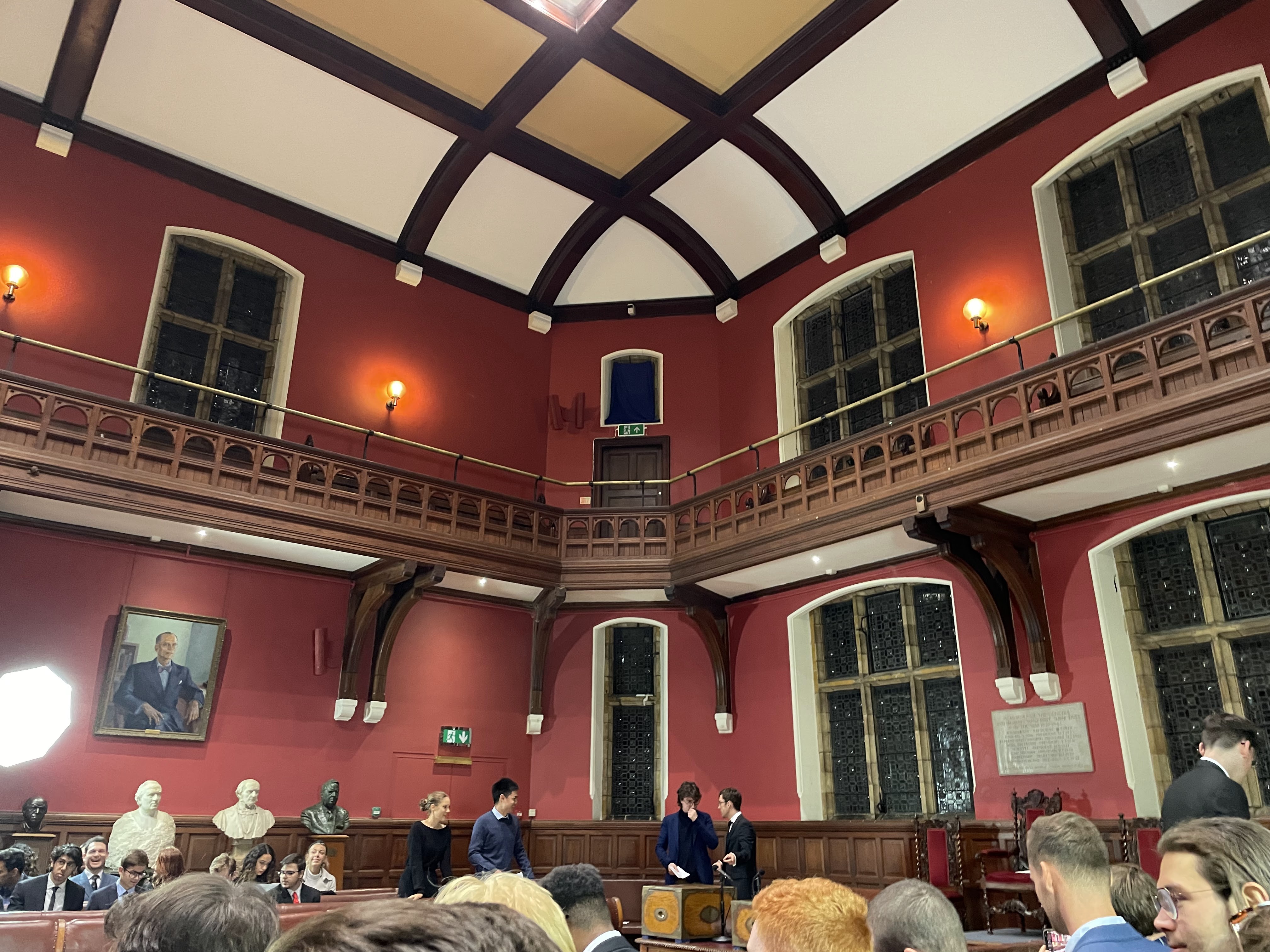
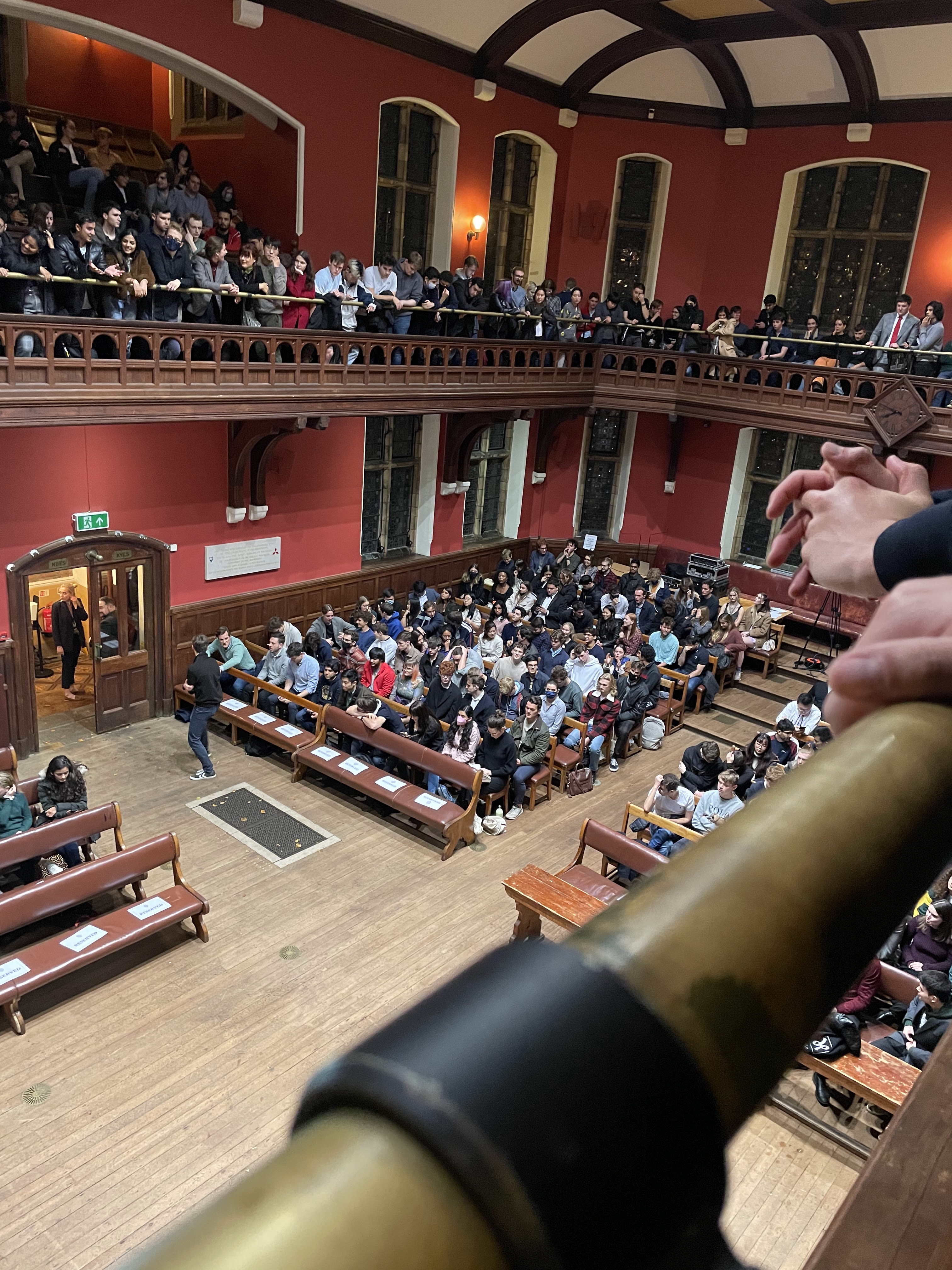
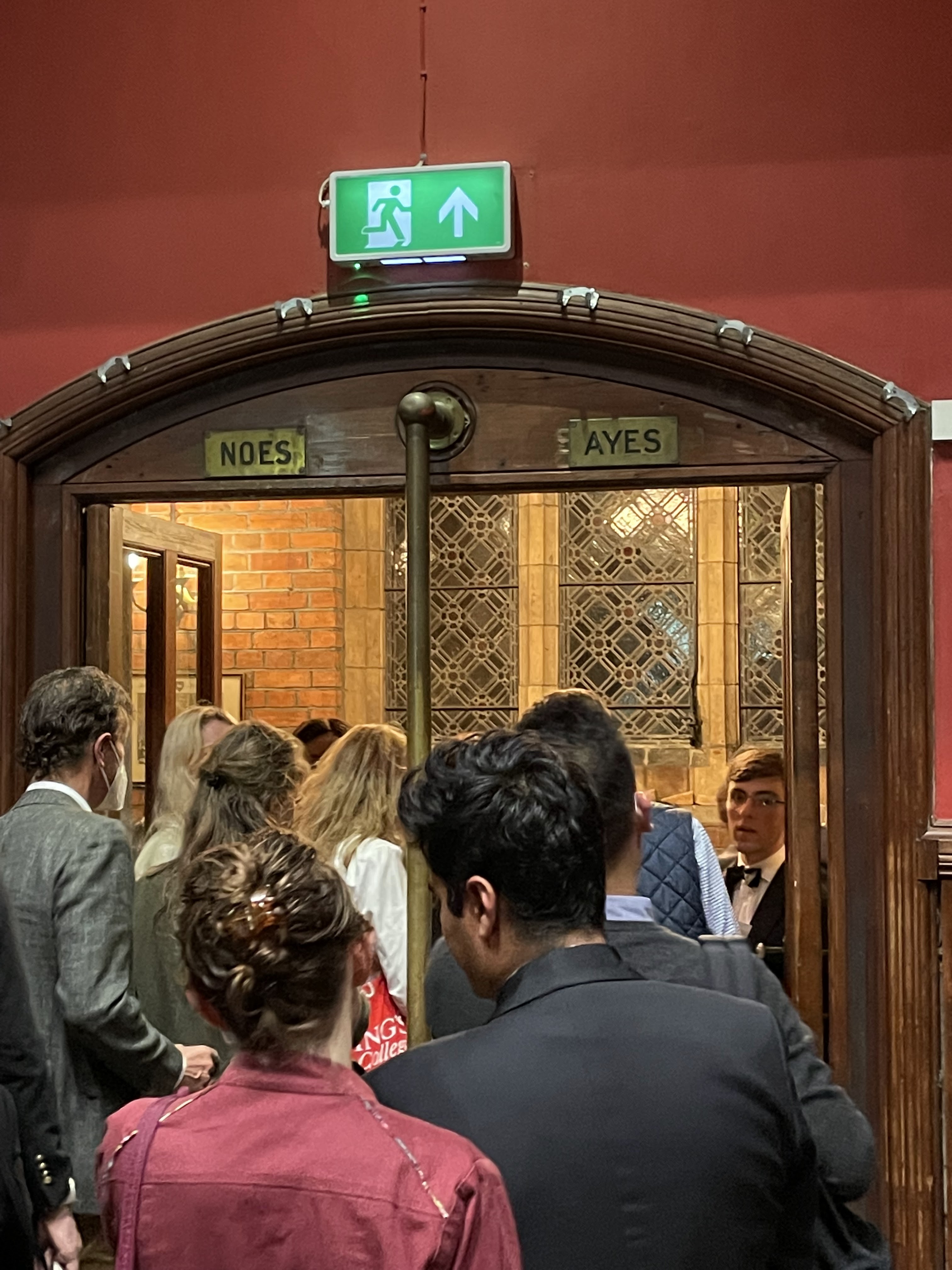
Another one of my favorite places in Oxford is the Oxford Union (different from the Oxford University Student Union). The Union is a private debating society whose membership is mostly drawn from the University. Since it is an independent entity from Oxford University, it has a lot of freedom regarding what topics can be discussed and what speakers can be invited. The Union has hosted many high-profile speakers, including Richard Nixon’s first public appearance after his resignation and O. J. Simpson’s first speaking engagement following his trial. Other notable speakers throughout the Union’s nearly two-decade history include Bill Clinton, Mother Teresa, Malcolm X, James Baldwin, Jon Stewart, Albert Einstein, Winston Churchill, and Benazir Bhutto (herself a former President of the Oxford Union). Every Thursday during term time, the Union hosts a debate where students and experts speak for or against the motion before the house. At the end of debate, members vote on the given motion by walking through doors labeled “Ayes” or “Noes”.
The Oxford Union Debate Hall
The Oxford Union Debate Hall from the Gallery
The doors which members use to vote
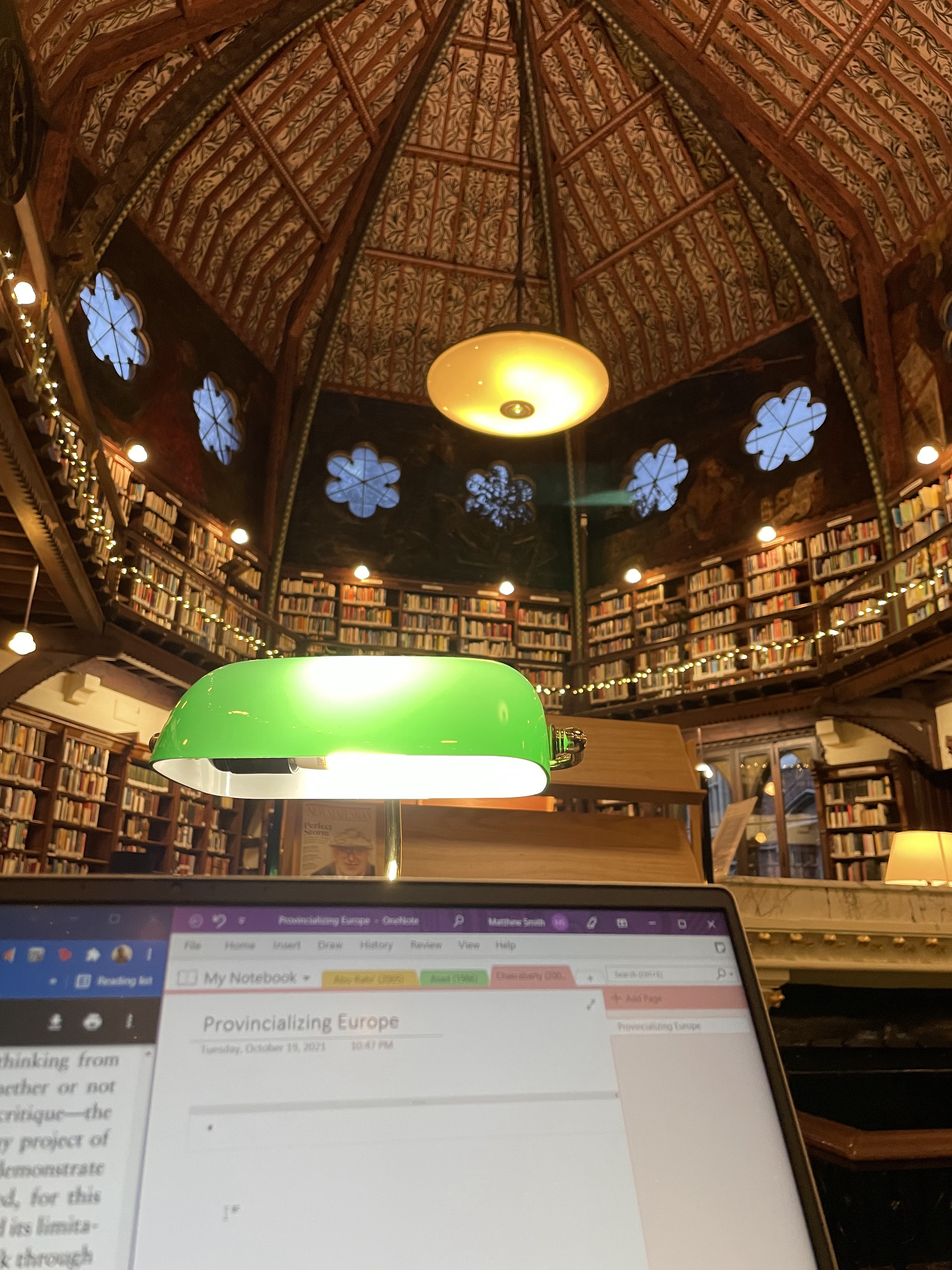
The Oxford Union library. An area where members can work and study.
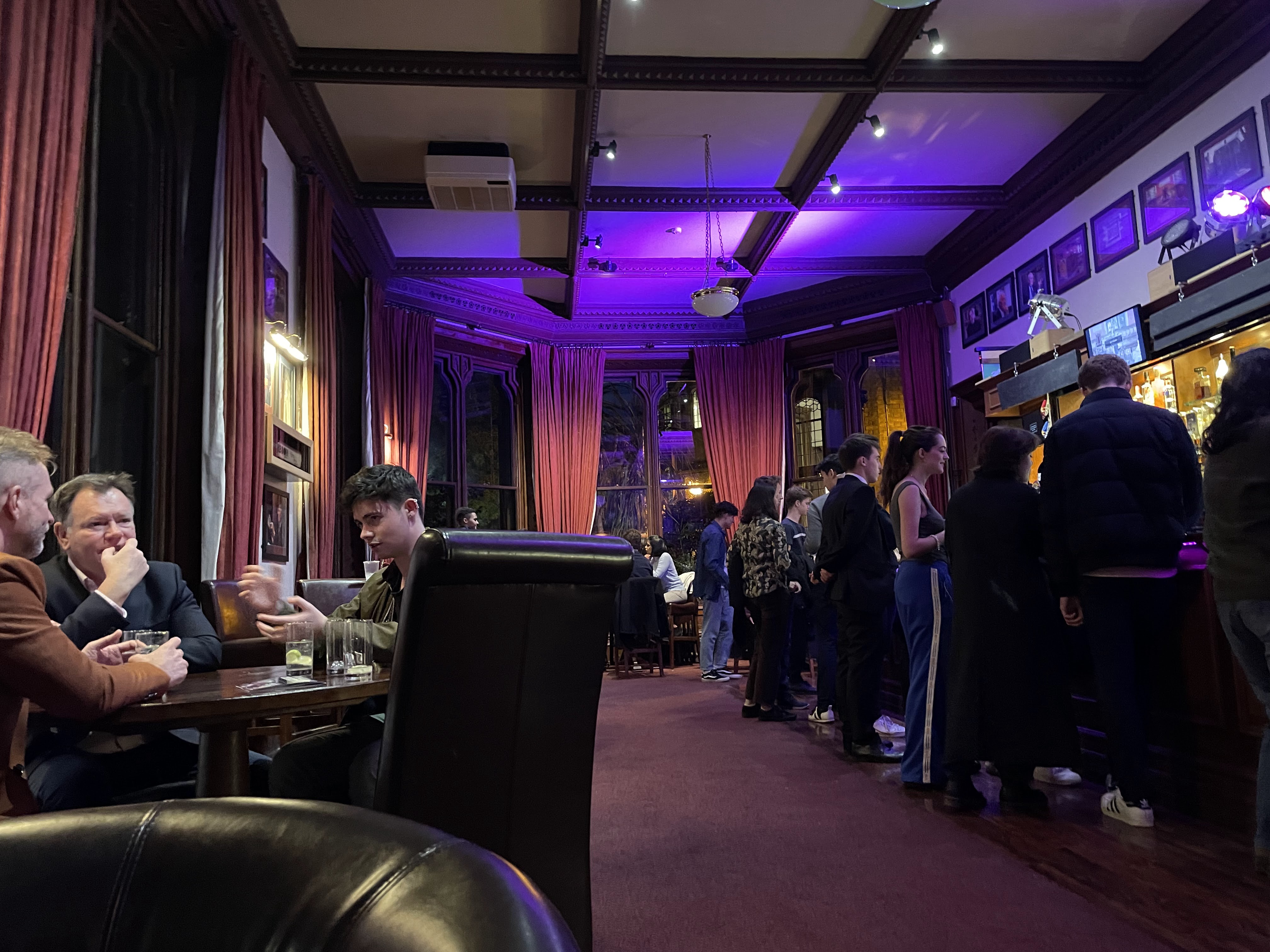
The Members Bar, where many gather before and after Union events
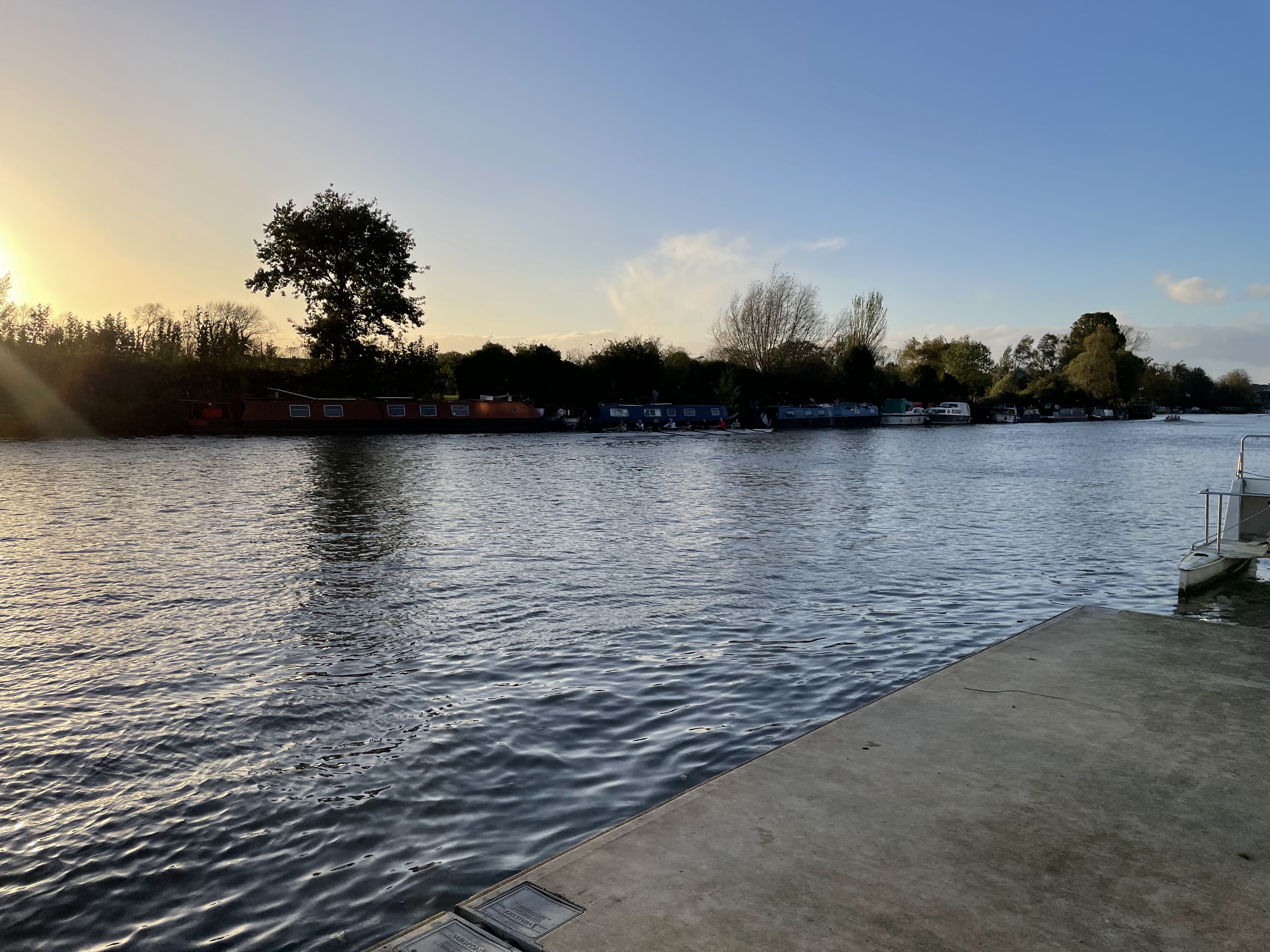
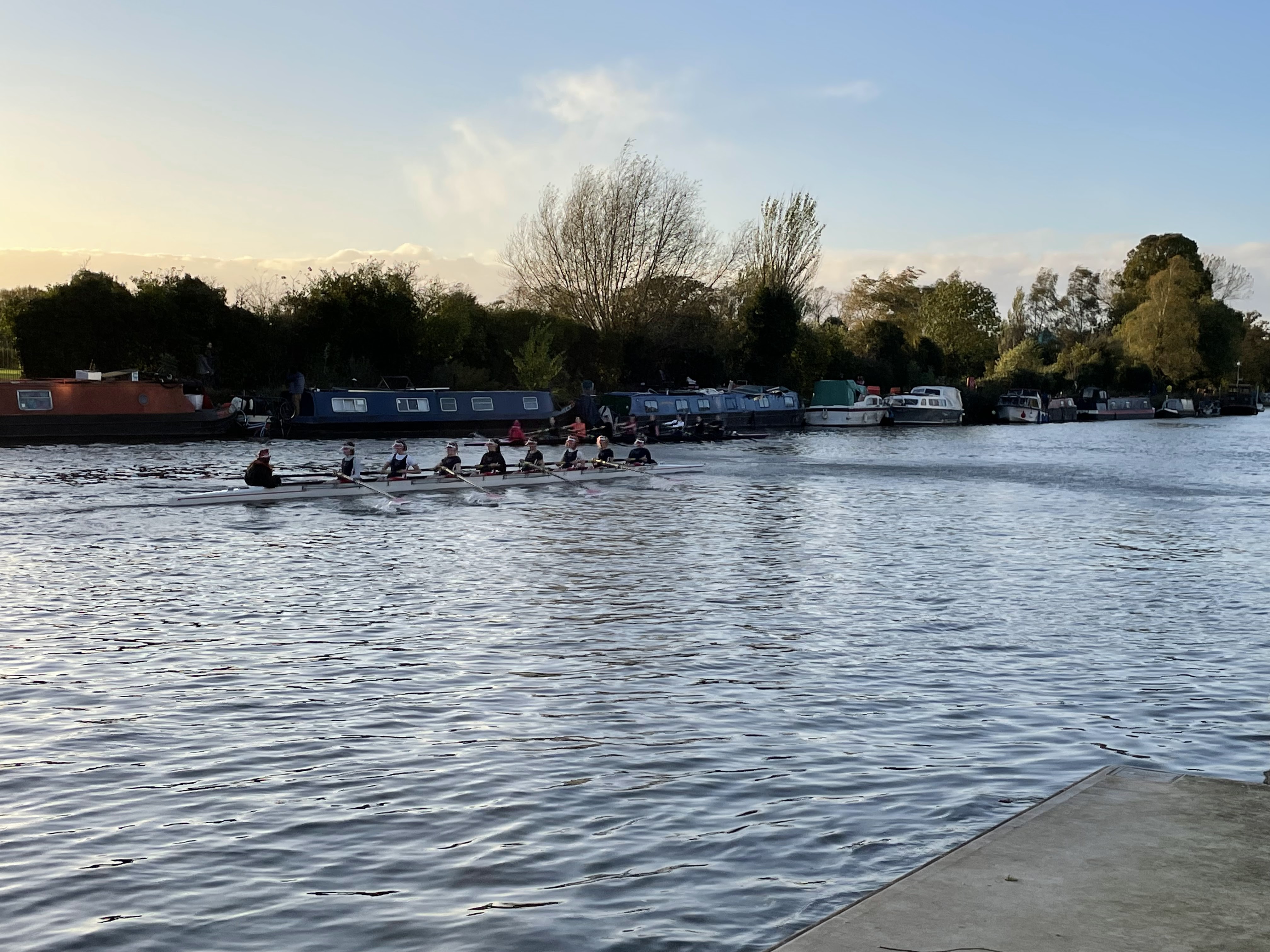
I’ve also started rowing for the St. Antony’s College Boat Club, an activity I quite enjoy. The river is such a beautiful place in the evenings when the sun begins to set. Rowing is also something that pulls me away from doing work, allowing me to focus on something else, even if it is just for an hour or two.
The River Isis at sunset
Eights on the river
Another post to follow shortly! Thanks for reading!
September 23, 2021 – Well, dear readers, I’m back once again; this time with a bachelor’s degree and a rebranded blog: “Reports and Reflections from Life Abroad”. All of my content from my semester in Jordan is still available to read, and I will once again update weekly about my newest adventure: graduate school at Oxford!
Starting October 2nd, I’ll be studying for my MPhil in Modern Middle Eastern Studies at St. Antony’s College, Oxford and the Faculty of Oriental Studies. I’m very excited to share this next adventure with you all! Welcome back to the blog!
December 12, 2019 – Part 2 of lessons from abroad:
Lesson 3: We are small, and that‘s okay!
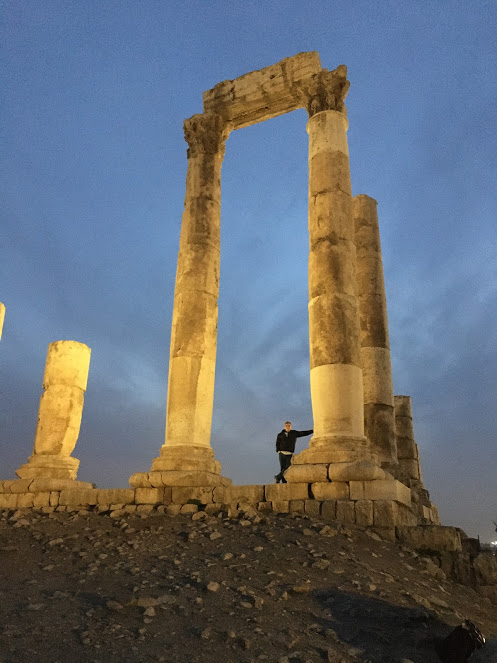
I’ve written a lot about living in a historical place like Jordan, so I won’t recount what that’s like. However, being in front of such history is a humbling experience. At times, it puts everything in perspective, making you realize how small you are when comparing your life to all of history (and sometimes physically how small you are, like in the photo above at the Temple of Hercules). As a naïve 21 year-old, it makes me think about a lot of things: what is going to be my mark on the world? How will people remember me when I’m gone? In my experience, when you face questions like this, you have two options: let them discourage you, or use them to motivate you. I always try to make it the latter. Just because you’re small doesn’t mean you can’t achieve great things. Who knows, maybe one day, people will pay 1 Jordanian Dinar to see what you contributed to the great narrative of our world.
Lesson 4: If something frightens you, do it.
This is the most important lesson I learned while abroad. Before I left for Jordan in August, I was terrified. How was I going to leave and go to a place where I don’t know the language or the culture, and I don’t know anyone?? I’m 20 years-old, this is crazy! I wish my past self could see me right now. Writing a blog post about everything I learned, going through all my photos, mentally preparing to say goodbye to some of my new best friends, and packing all those souvenirs that I just had to have. I hiked up waterfalls, climbed up mountains, and rode camels through the desert. Over a semester, I traveled to 5 countries, I learned enough Arabic to hold conversations with taxi drivers about a myriad of topics, and I grew a lot as a person. I know it’s cliche to say that being abroad really changes people, but sometimes cliches are cliche because they’re true.
I promise, O Jordan, that one day, I will return. Until then, a piece of me will remain.
.أعدك الاردن, إن شاء الله, سأعود. حتى ذلك الوقت, قلبي سيبقى مع أنت
Thanks again to all my readers. Your constant support of me and my blog was immensely appreciated throughout the semester.
December 7th, 2019 – Since its finals week and there’s not much else to do, I thought I would write a few short posts this week about different lessons I’ve learned while studying in Amman. Hopefully I’ll find a way to weave some photos in so they’re not as boring.
Lesson 1: Take time to share some tea
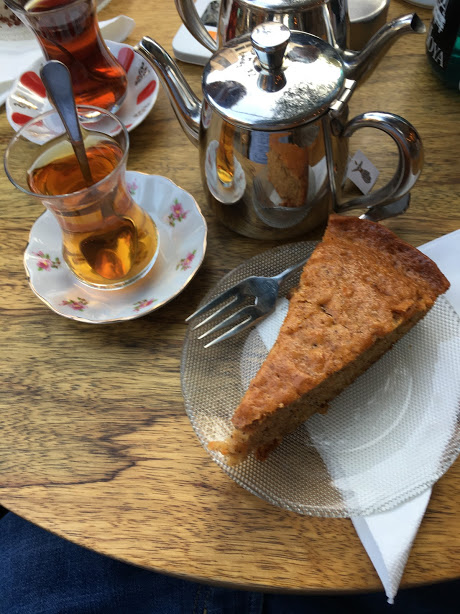
Yesterday, my friend Ben and I had tea with a Palestinian gentleman who owns a cafe near my house. The cafe sits beneath the unfinished Museum Jerusalem, a project of the cafe owner. The museum is set to open next month. The owner is a well traveled man, having been through most of Europe, the United States, the Middle East, and Australia in his 70 year life. One of his greatest, non-political pieces of wisdom he likes to share with young people from the West is: take time to share some tea with the people you meet throughout your life. This is also something I’ve noticed living in Amman. In the US, people rarely have time to sit and enjoy coffee or tea with someone they know (let alone someone they just met) for two or three hours. But, often, if you take the time to slow down, sit, and enjoy a longer conversation with someone, you’ll walk away feeling refreshed for having taken that time. Of course, the lesson goes beyond its literal meaning. Being in Jordan, I’ve learned to slow down and enjoy the everyday wonders of the world: the rain falling on a quiet street, the sound wind makes when it passes through the trees, the quiet serenity of a sunset. The rushed, success-driven culture of the United States often blocks from taking in all the possible opportunities on the journey of life. So next time the moment presents itself, remember to take time to share some tea.
Lesson 2: This world has room for everyone
Over the past 16 weeks, I’ve heard lots of stories. We learned that cab drivers, waiters, and baristas are great people to practice Arabic with. If you’re lucky (and they’re not busy), your practice could turn into much more than you thought. Most of Amman’s resident speak a least some English. Therefore, most conversations that begin in Arabic turn into English when I run out of my limited vocabulary. Sometimes, these conversations can make you really think deeply about ideas you have never considered. A common story in Amman is that of the Palestinians. While there are no statistics published by the government, some say that as many as 7 in 10 people living in Amman أصلكم (descend from; originally are) Palestinian. There are 2 stories among the Palestinians in Amman: “My father/grandfather came to Jordan after 1948” or “My father/grandfather came to Jordan after 1967”. In Amman, the Palestinians and Jordanians live together without any issue, but, in the rural areas, some Palestinians claim that the Jordanians are not as accepting of them. The issue of refugees in Jordan does not end with the Palestinians. Jordan is also the largest home in the region to Syrian and Iraqi refugees. For these refugees, there false claims that Syrians are taking jobs that could be worked by Jordanians (sound familiar?). Yet, no matter where you come from, every person wants the same basic thing: to live a happy life free from danger. In the West, we often take our safety for granted, and the issues of conflict and displacement can often be viewed as things that happen “over there”. But in Jordan, “over there” is only about a 2 or 3 hour drive away from Amman. This world is more than wide enough for all of us to live together as friends.
I pray the prayer the Easterners do, May the peace of Allah Abide with you. Wherever you wander, Wherever you go, May the beautiful pslams of Allah grow. Through the days of labor And nights of rest, May the love of Allah Make you blest So, I touch my heart As the Easterners do May the peace of Allah Abide with you -An Old Arabic Verse-
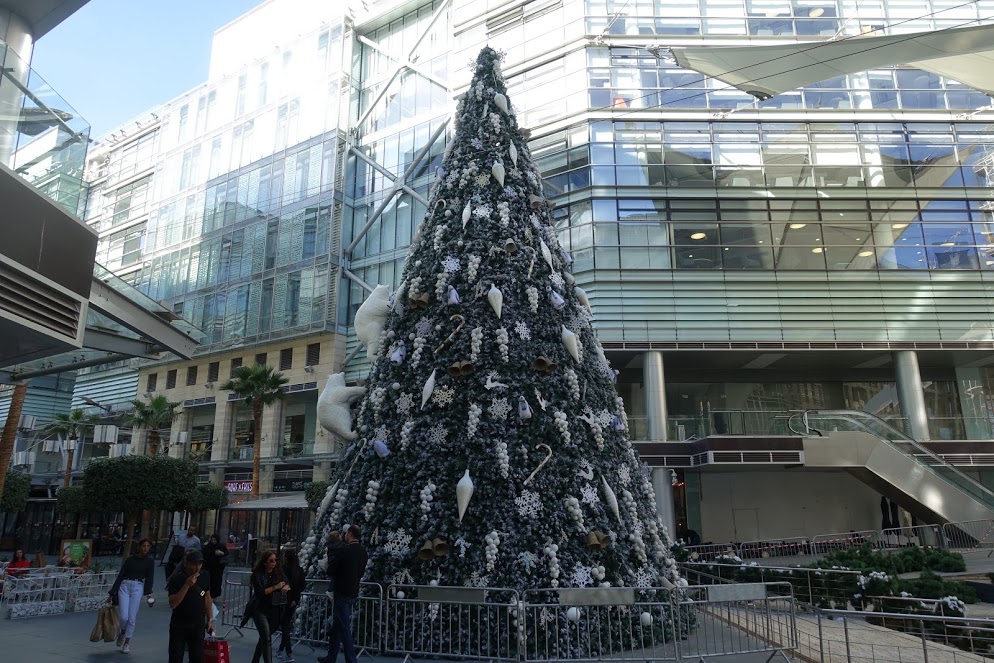
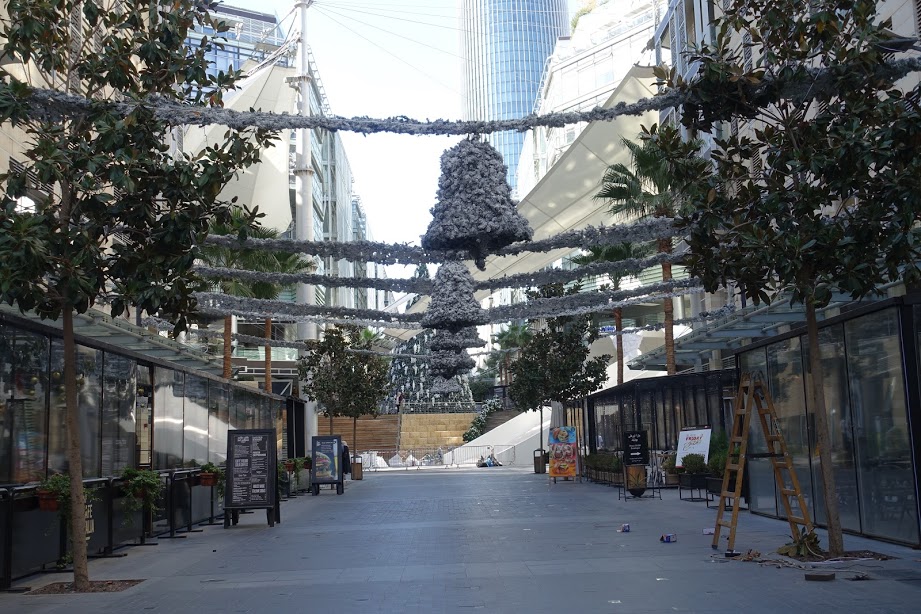
December 1, 2019 – I was informed that I haven’t written anything in awhile, but that’s mostly because I’ve been busy with finals and, therefore, haven’t done anything overly exciting. However, it is Christmas season in Amman, so I have lots of pictures to share. In Jordan, Christians make up about 4% of the population nationally, mostly concentrated in Amman. Many of these Christians come from Palestinian origin.
The Christmas Tree at the Abdali Boulevard
More decorations at the Boulevard
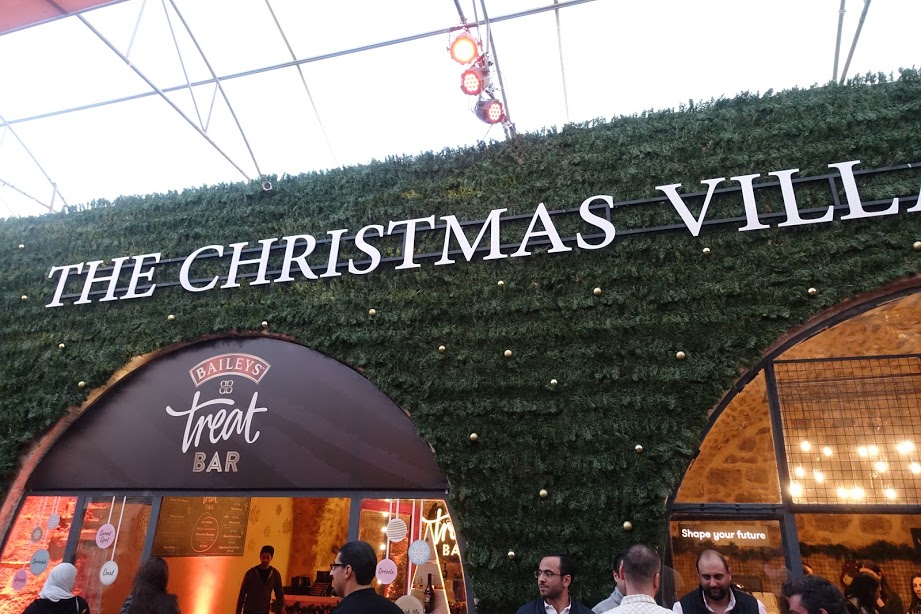
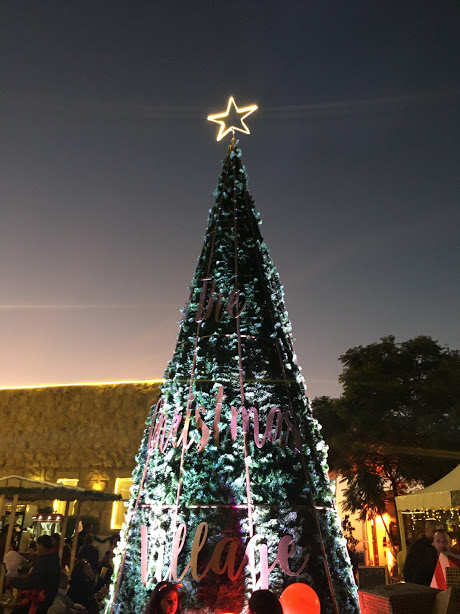
We visited the Christmas Village at the Kan Zaman Village on Saturday. The annual tradition is very popular among Jordanians.
The Christmas Tree at Kan Zaman Village
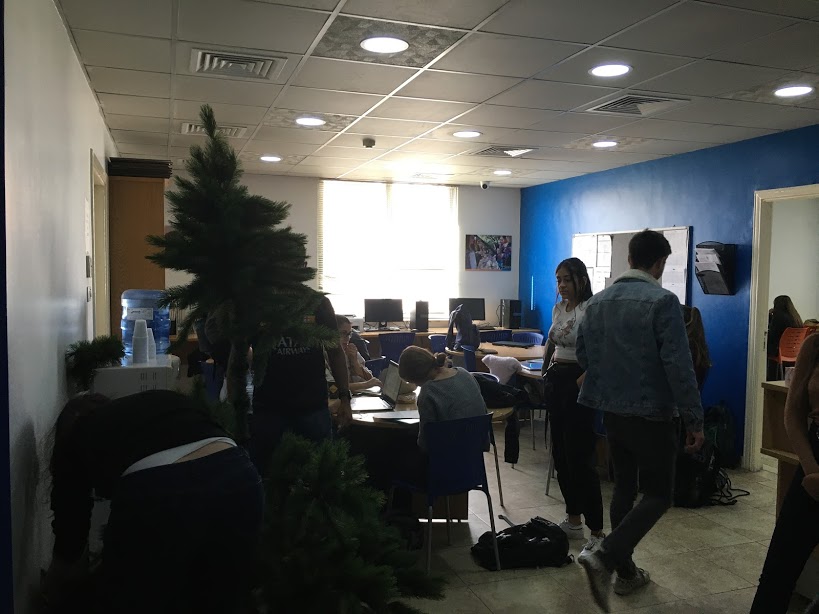
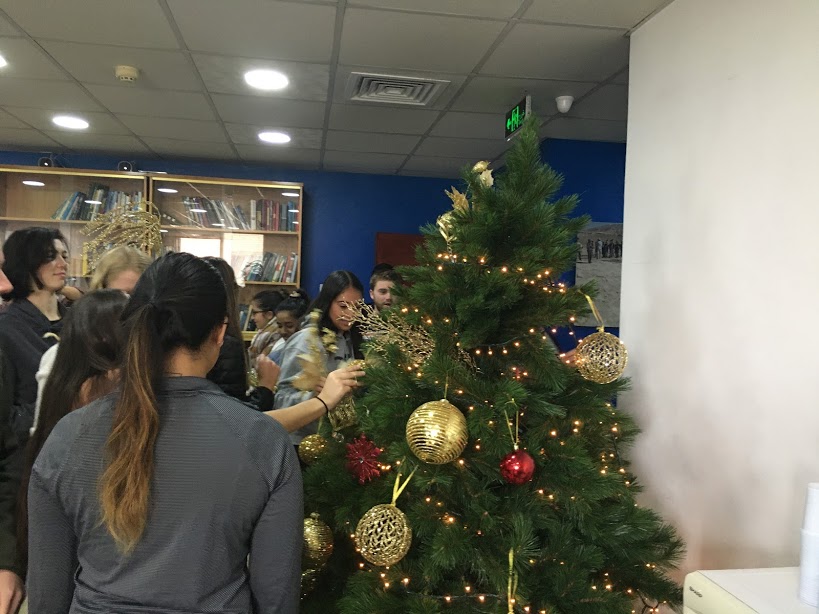
Despite the imminent threat of finals, we still had time at CIEE this week to set up and decorate our own tree before we head home to celebrate with our families.
It may not be a real tree, but I guess it still counts
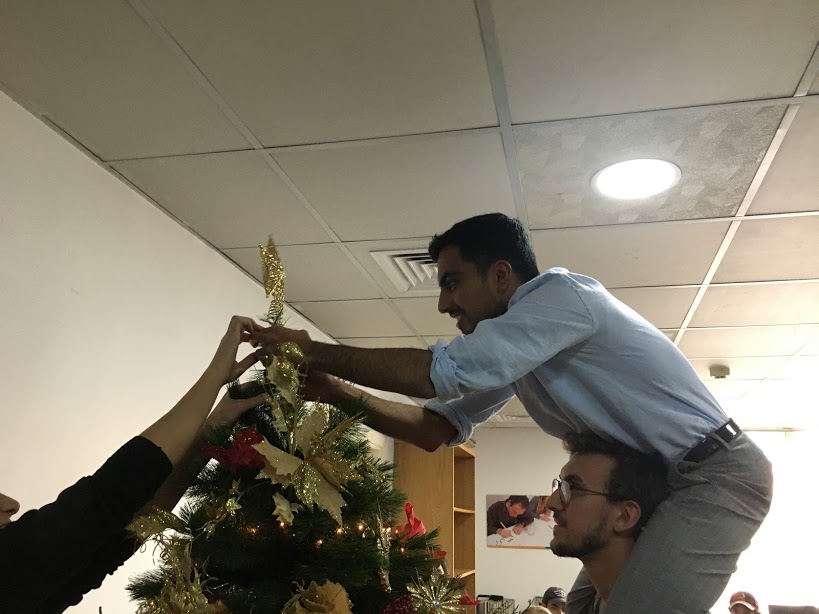
Everyone pitched in to decorate. My friend Conner and I strung the lights.
Can’t forget the star on top!
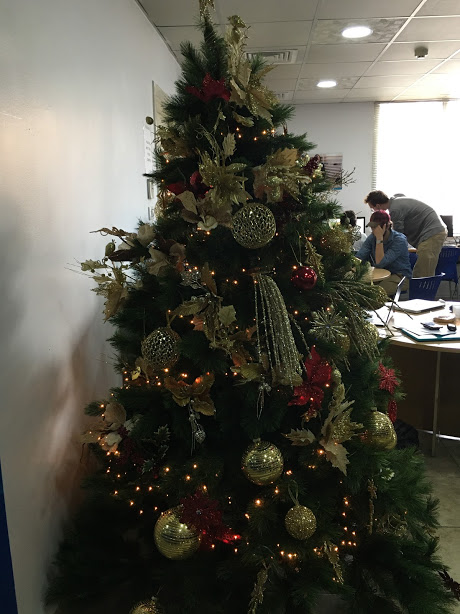
Our finished Christmas Tree
Juxtaposed with the holidays, I’ve been studying for finals and getting ready to come home in 11 days. Thanks for reading!
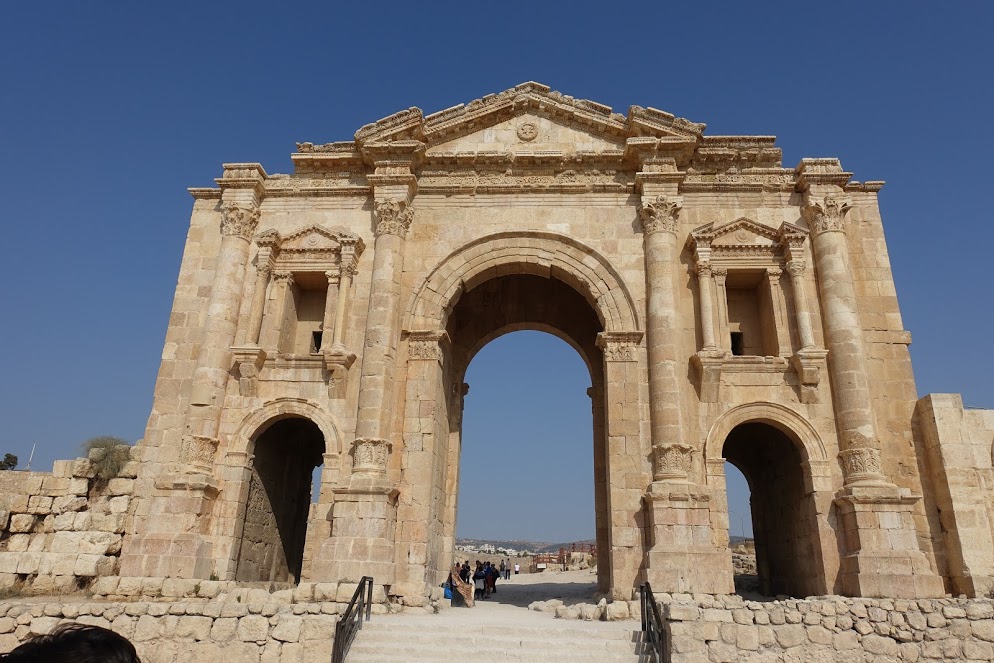
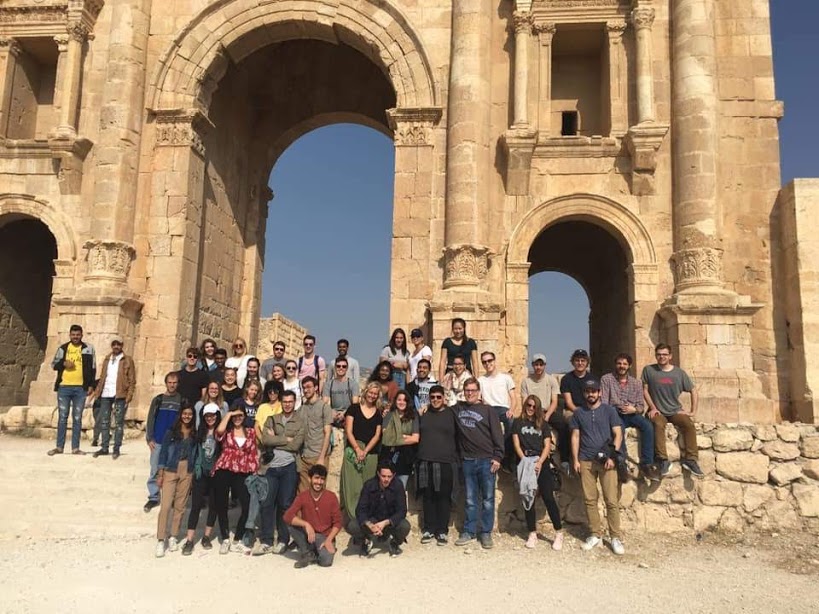
November 17, 2019 – Jerash is an ancient city about 50 km north of Amman. The archaeological park within the modern city is home to one of the largest sites of Roman ruins outside of Rome. The journey at Jerash begins at the mighty Arch of Hadrian, built when the Roman Emperor visited Jerash (then Gerasa) and the other cities of the Roman Decapolis. If you’re keeping track, I’ve visited 3 of the 10 cities of the Decapolis (Gerasa, Gadara, and Philadelphia).
The colossal Arch of Hadrian at Jerash’s entrance
Our CIEE group shot in front of Hadrian’s Arch
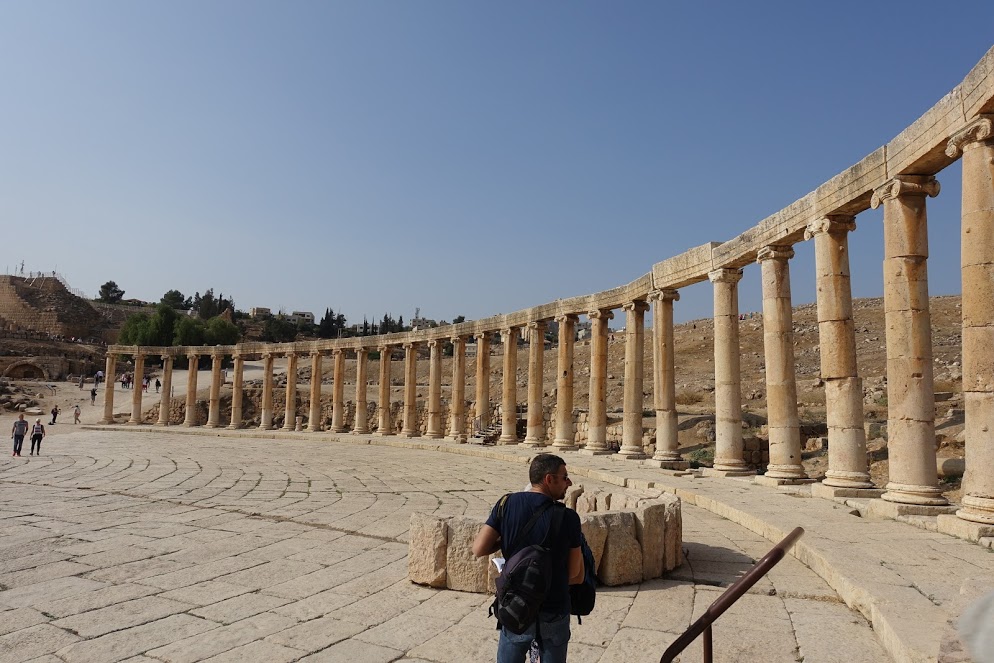
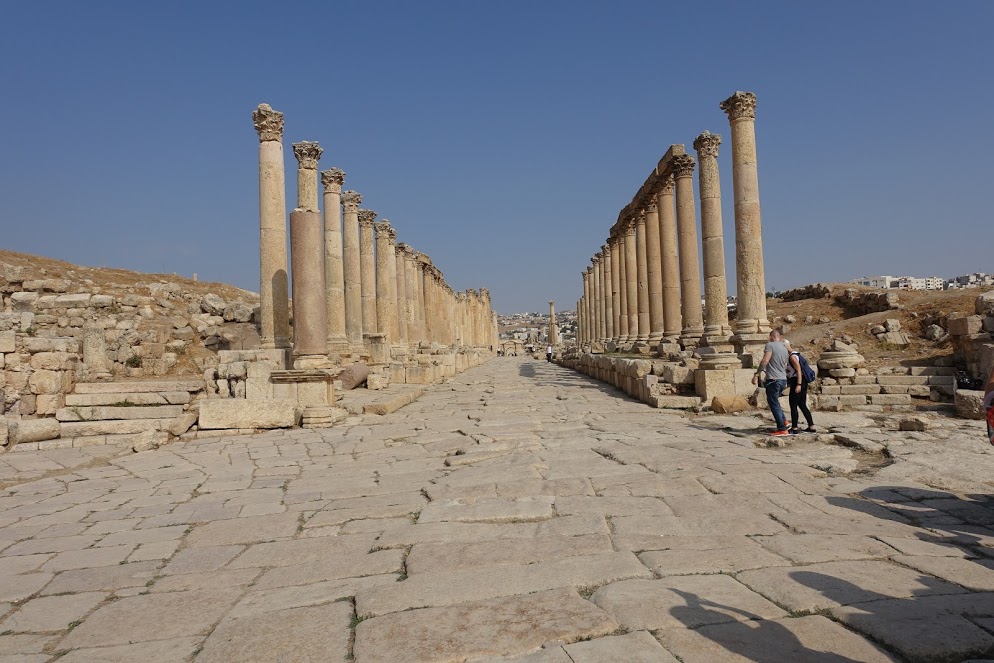
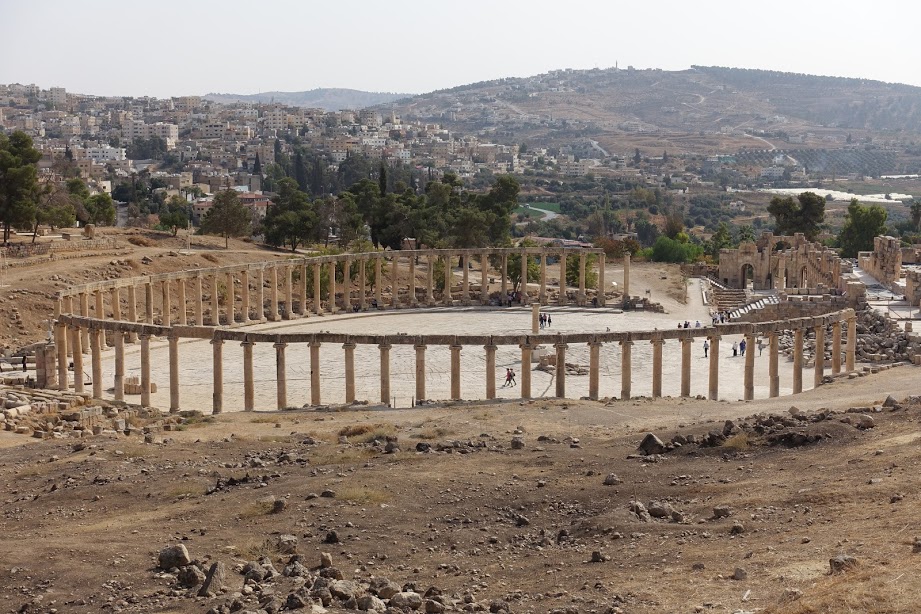
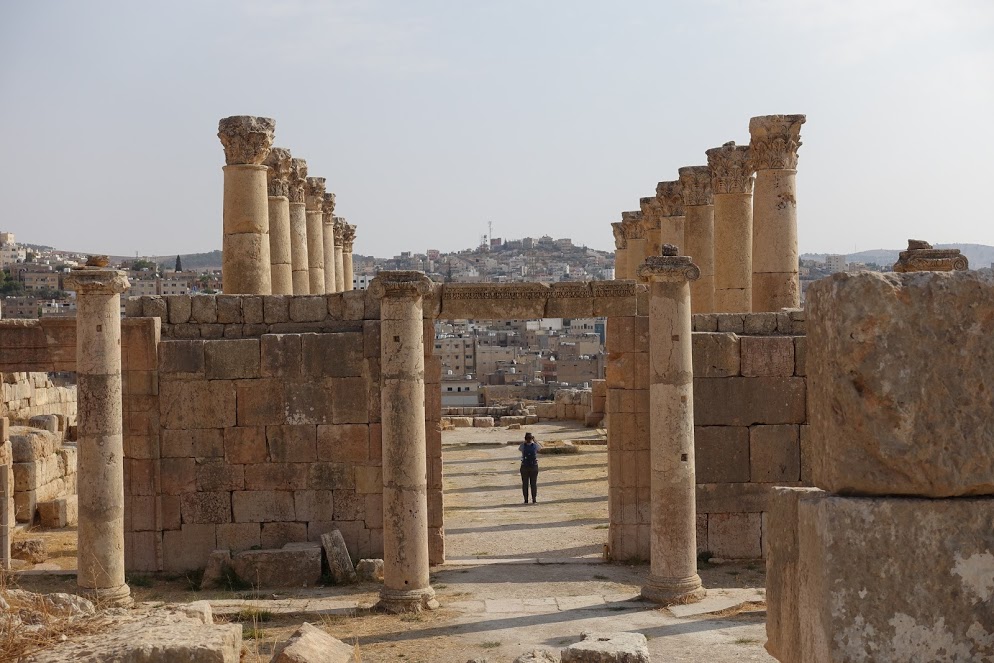
Jerash is nicknamed the “city of columns,” and it’s easy to see why as you walk through the streets of the ancient city. Large columns of every style loom over the various centers and streets of Jerash. (Lots of pictures of columns ahead)
Some of the columns surrounding Jerash’s forum
Jerash’s famous colonnaded streets. This road leads out of the city to the East.
The forum from above
Jerash’s cardo maximus (the North-South street in every Roman city. Jerash’s connects Damascus in the North to Amman (Philadelphia) in the South).
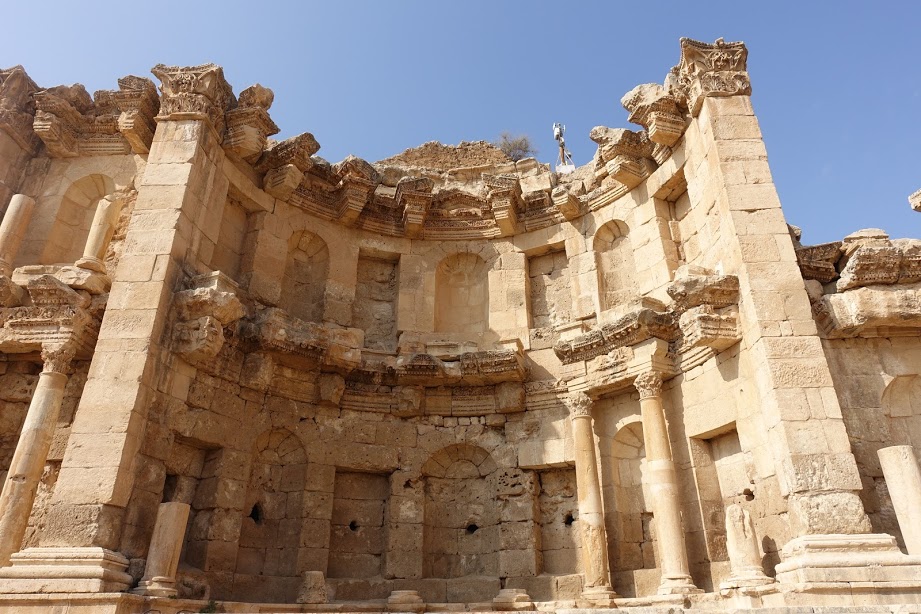
Jerash’s nymphaeum
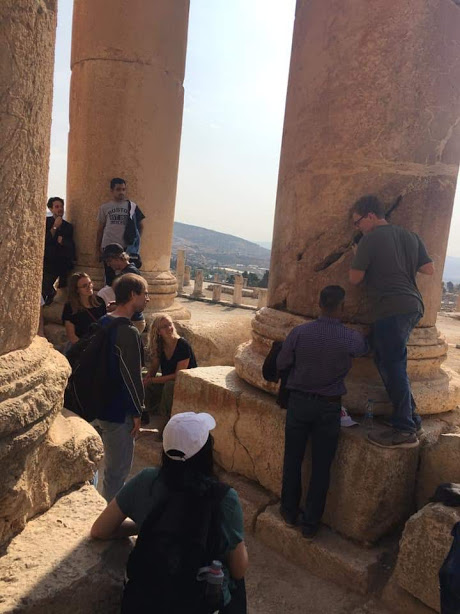
A special feature of Jerash’s columns is that some of them can still be moved by human force. At the Temple of Artemis, a spoon can be positioned where the column meets its base, and when one pushes against the column, the spoon will move up and down, proving that the columns in Jerash are not as stable as they seem!
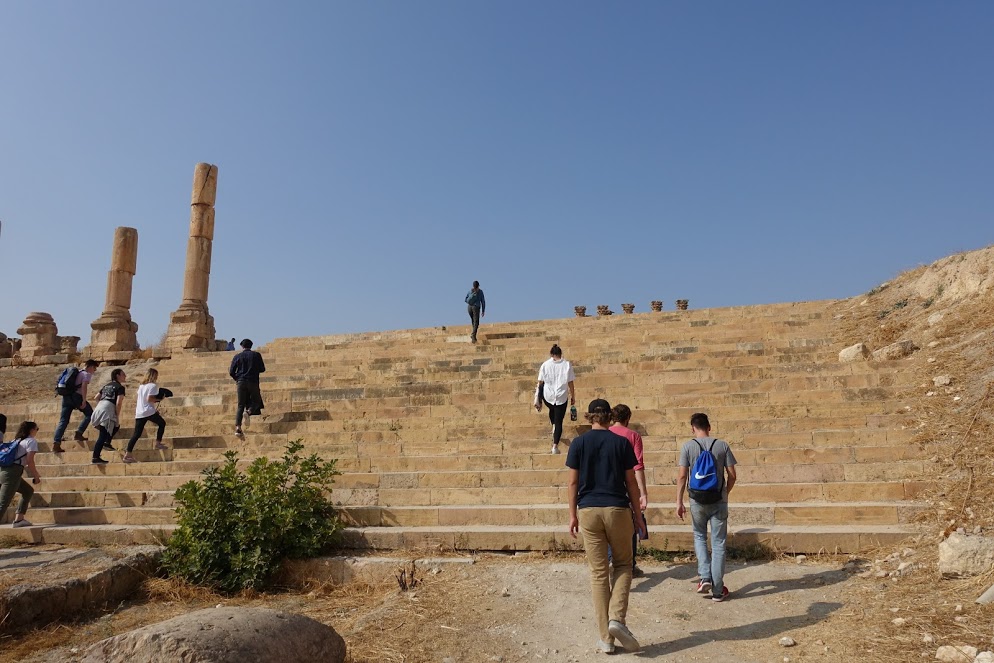
The steps to the Temple of Artemis
Moving the columns at the Temple of Artemis
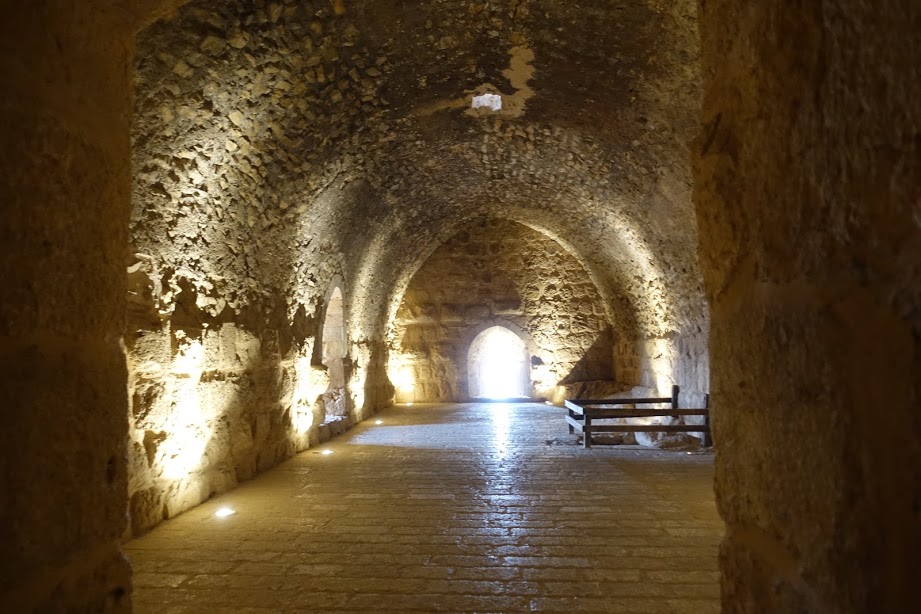
After Jerash, we went to Ajloun Castle. The castle was commissioned by Salah al-Din as a means of defense from the invading crusaders. Historically, Ajloun Castle lies on a strategic road from Damascus to Alexandria, creating an epicenter for taxation and military control on the trade route.
An example of the interior of Ajloun Castle
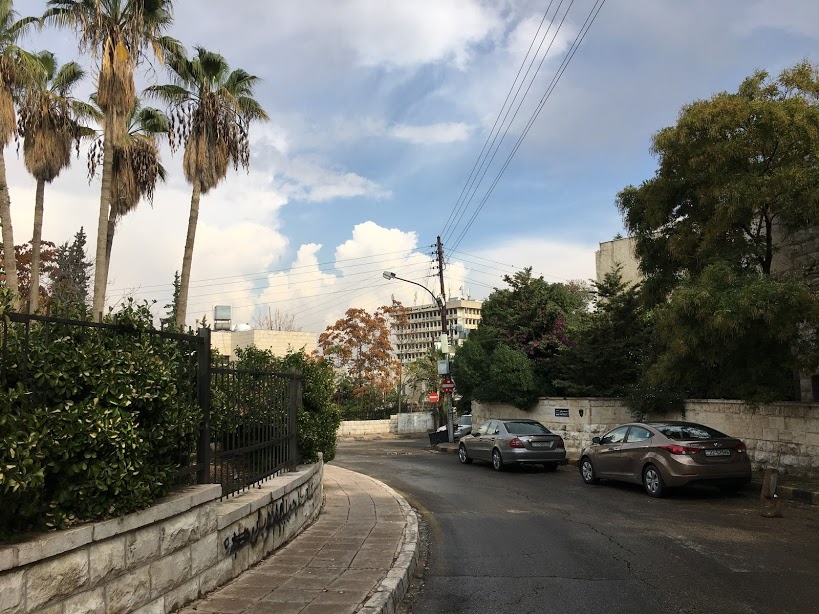
On Friday night and Saturday morning, Amman experienced short, light bursts of rain, lasting no more than 10-30 minutes at a time. The Jordanians welcome the rain, marking it as the beginning of winter in Amman. I took a walk around my neighborhood on Saturday after the rains, and captured a beautiful photo of the cold, sunny day.
Jabal Weibdeh after the November rains
It is getting very cold in Amman. Currently daily highs average about 17°C (62°F) and lows averaging about 4°C (39°F) with wind about 9 mph. I’ve been wearing sweaters and my winter jacket to school, and sleeping under 2 blankets at night. The Christmas Villages begin this weekend in Amman, and my friends and I are excited to explore them before we head back to the states to celebrate Christmas with our families.
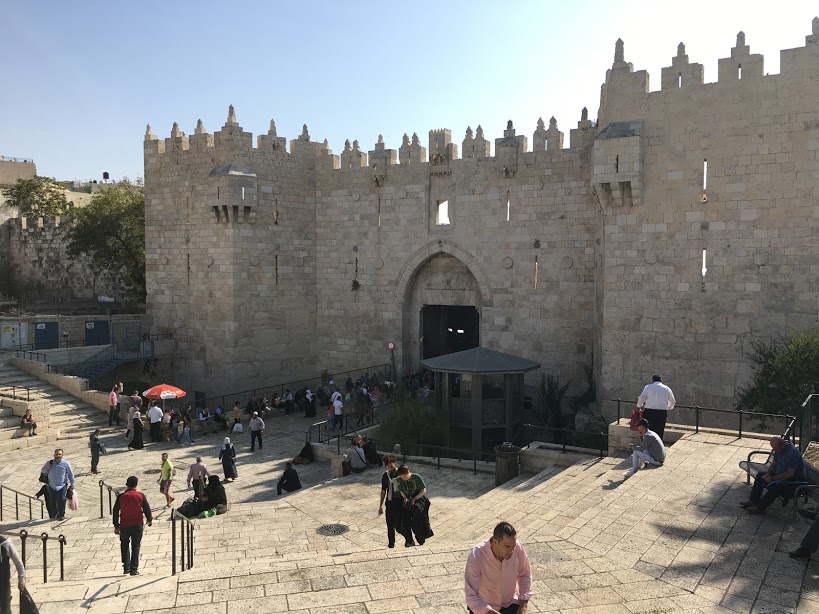
November 11, 2019 – I came to Jordan with 1 trip in mind: traveling to Jerusalem. I finally got the chance to go there this past weekend with my friends. We crossed the King Hussein Bridge border crossing from Jordan into the West Bank on Friday afternoon, and, after going through immigration on the other side, we arrived at our AirBnb in Jerusalem by Friday evening. The next day we started our day by taking the light rail to the Damascus gate (a 5 minute ride from our neighborhood).
The Damascus Gate leading to the Muslim Quarter of the Old City
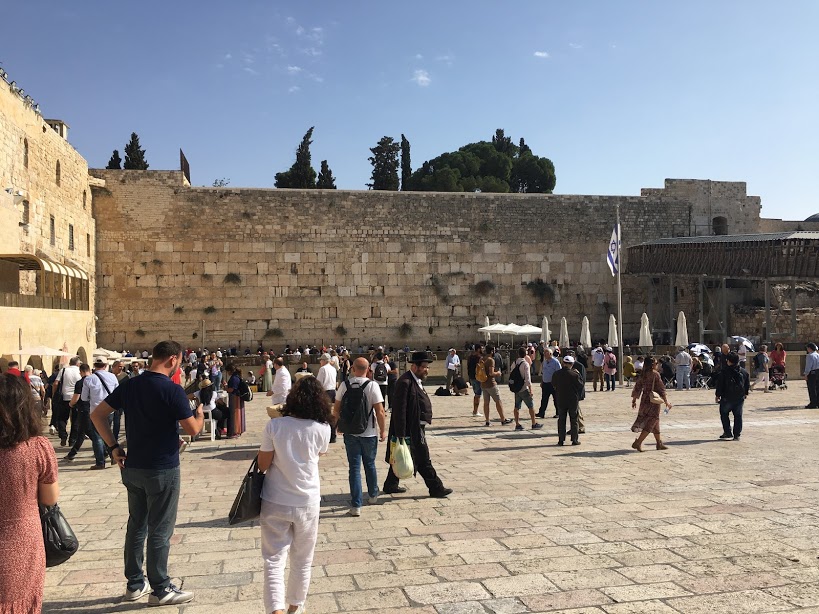
The Old City of Jerusalem is just as exciting and vibrant as I remembered it. People of every faith and every background going about their daily lives while tourists swarm their city. We made our way to the Western Wall, the remnants of the Second Temple. We returned to the Wall on Shabbat, and it was much more full than it was on Friday morning.
The Western Wall
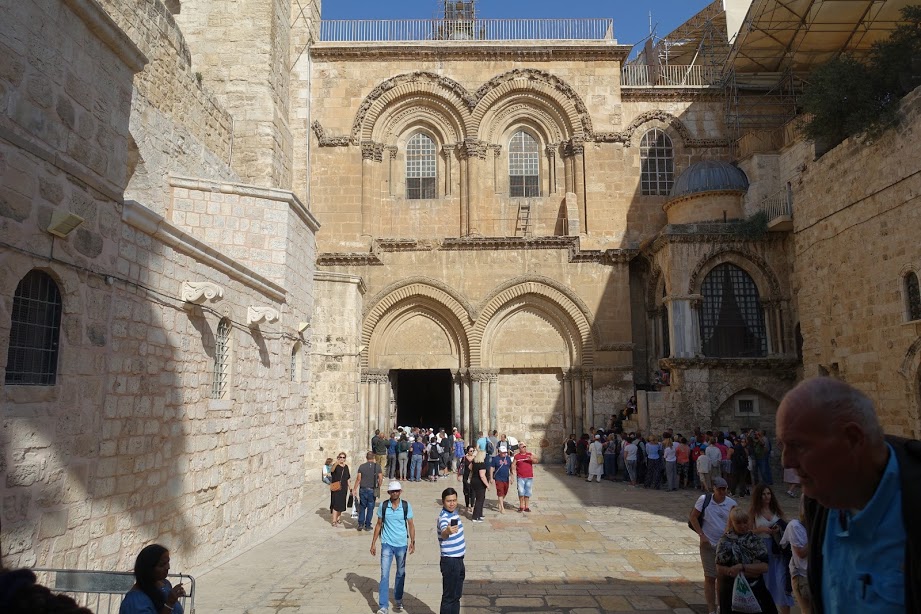
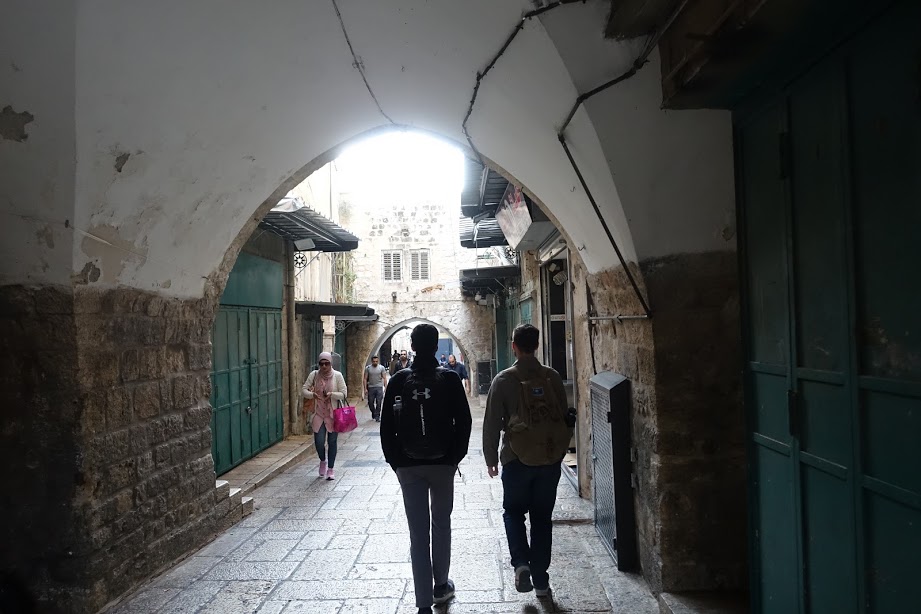
Following the Temple, we went to see the Holy Sepulchre and just explored the small, narrow streets of the Old City.
The Holy Sepulchre
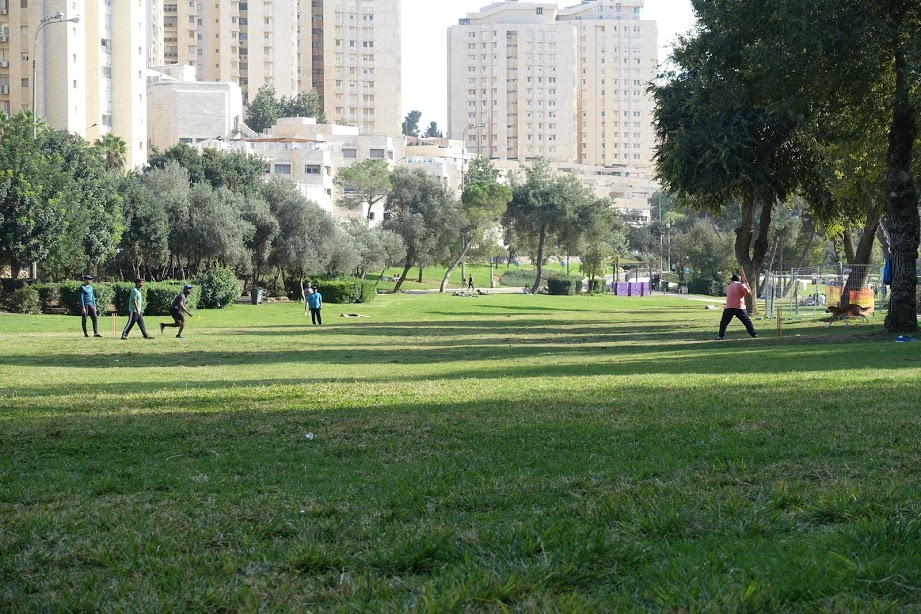
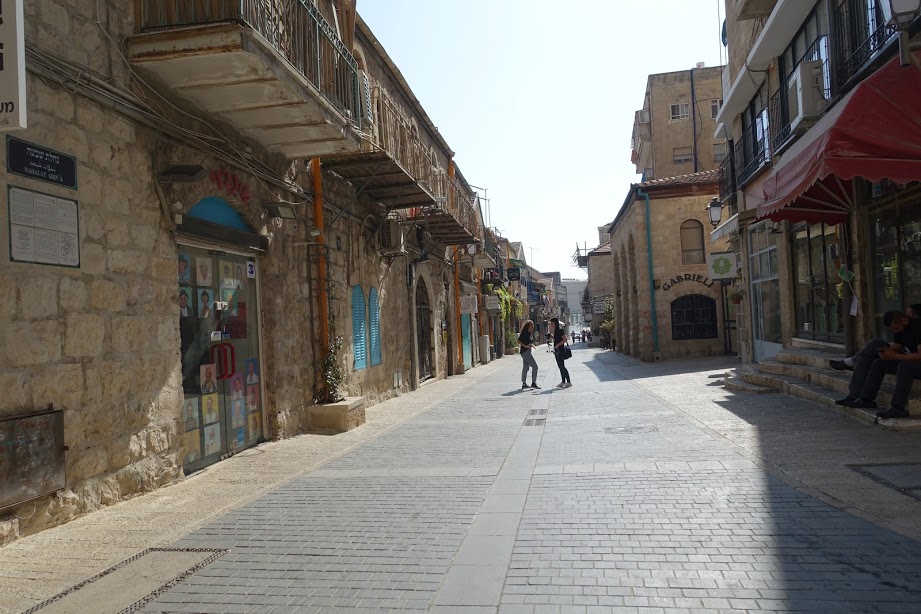
After a long day of exploring the Old City, we attempted to get the light rail home only to realize that the tram stops operation 90 minutes before Shabbat and doesn’t resume service until 90 minutes after Shabbat ends. So we ended up paying 50 shekels to a taxi driver to take us home. The next day, we explored the new city of Jerusalem. Again, because it was Shabbat, most businesses were closed. However, we still found a lot to see. First, we walked from the Old City to the new city just to explore by foot. We ended up seeing a lot of empty streets, but found our way to a park where we were so excited to see grass! There’s almost no green spaces in Amman, so my friends and I spent time just lying in the grass under the trees in the park while watching some locals play a game of cricket.
It was a lovely few hours being able to sit in a green area
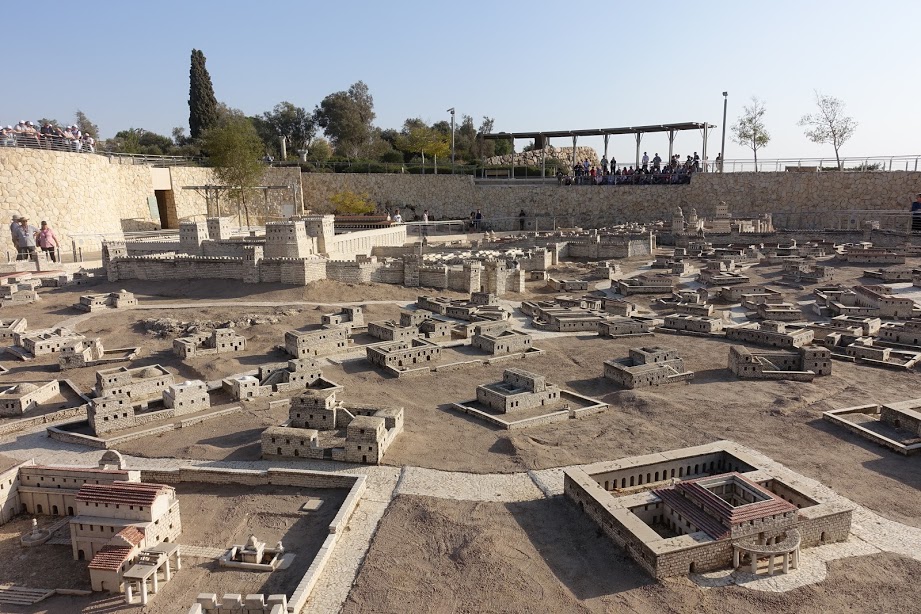
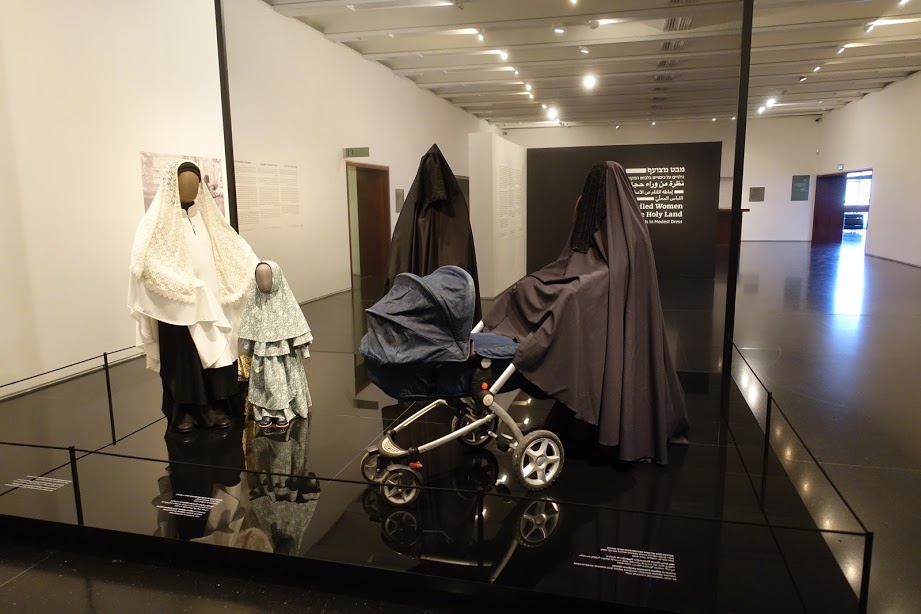
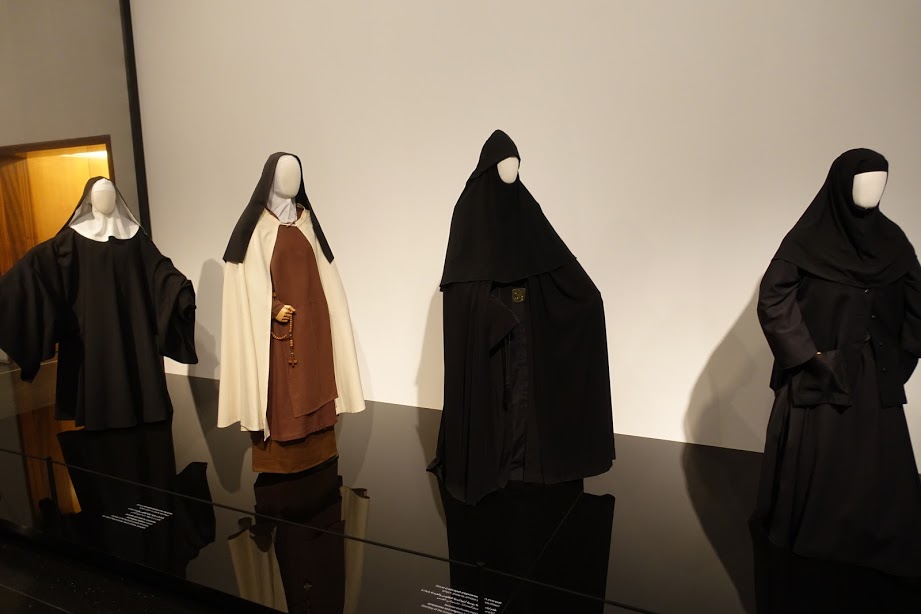
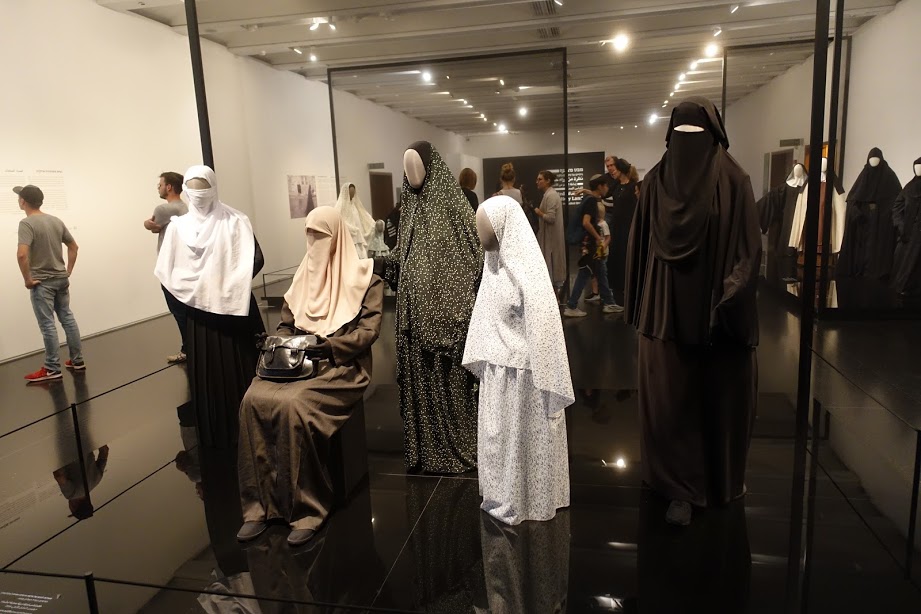
After sitting for awhile, we headed up to the Israeli Museum, which houses a model of Jerusalem from the Second Temple Period, some of the original Dead Sea Scrolls, and rotating art exhibitions. The temporary exhibit this season, “Veiled Women of the Holy Land”, displayed the various conservative clothing choices of Jewish, Christian, and Muslim women in Israel-Palestine. It was insightful to see how similar the forms of dress were to each other. Often, in the West, we tend to believe that only Muslim women choose to veil themselves, but many Jewish and Christian women also choose to dress conservatively in public.
A street in the new city on Shabbat
The model of Jerusalem during the Second Temple Period
The various veils and coverings worn by some Jewish women
The various veils and coverings worn by some Christian women (typically Catholic and Russian Orthodox nuns)
The various veils and coverings worn by some Muslim women
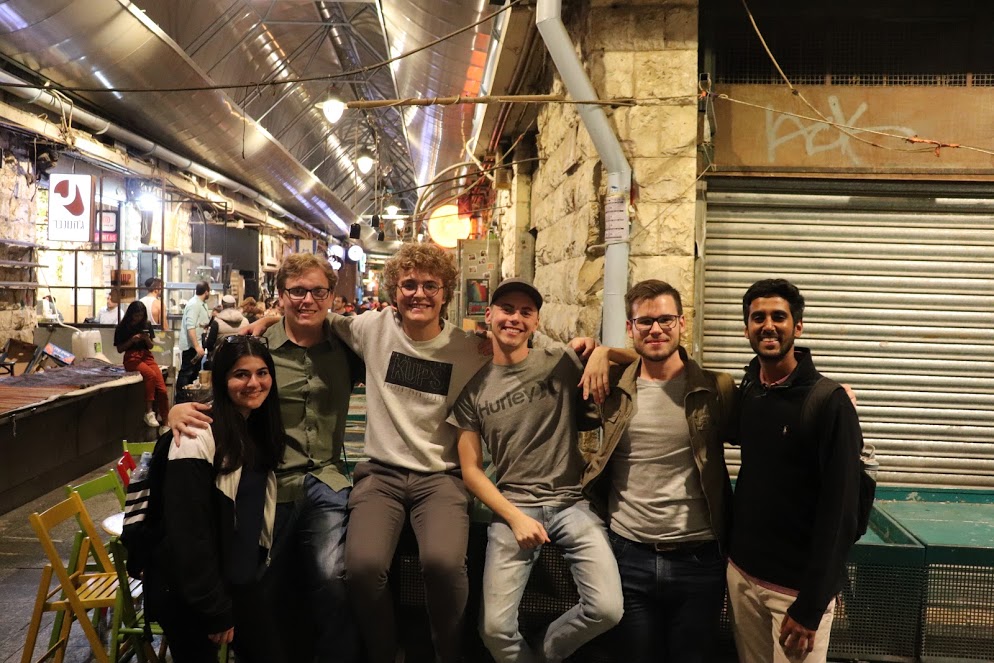
Following the end of Shabbat, we went to a market in the New City to meet some friends who were also visiting Jerusalem for dinner.
From left to right: Shana (UC Davis), me, Ben (University of Puget Sound), Ashton (University of Denver), Conner (Wofford College), and Basil (Villanova)
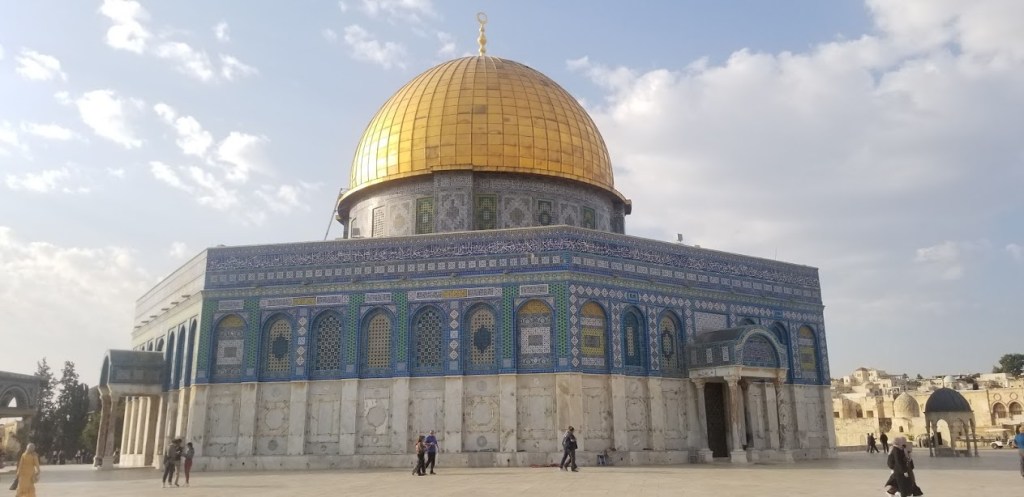
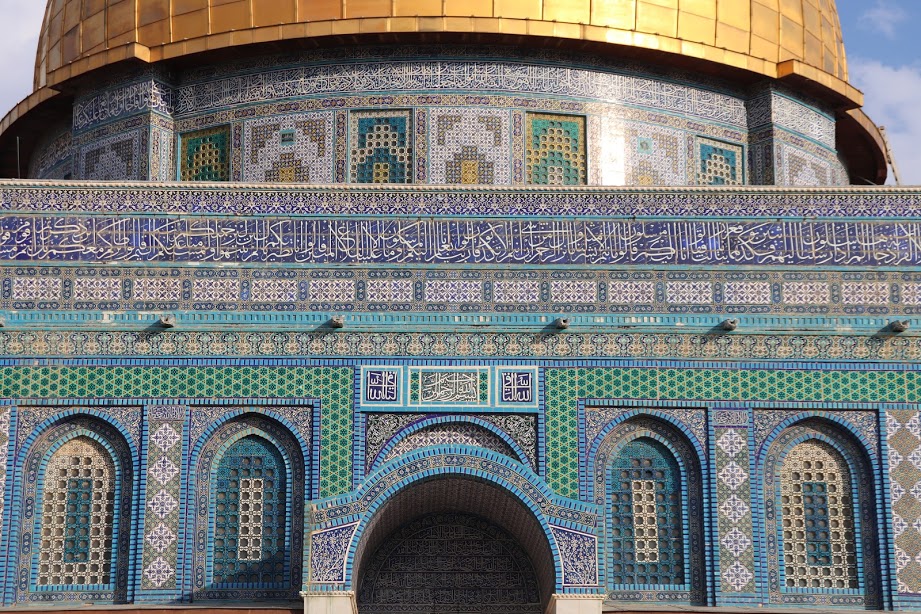
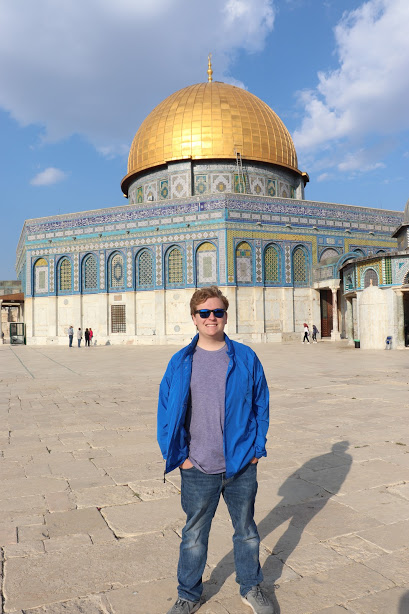
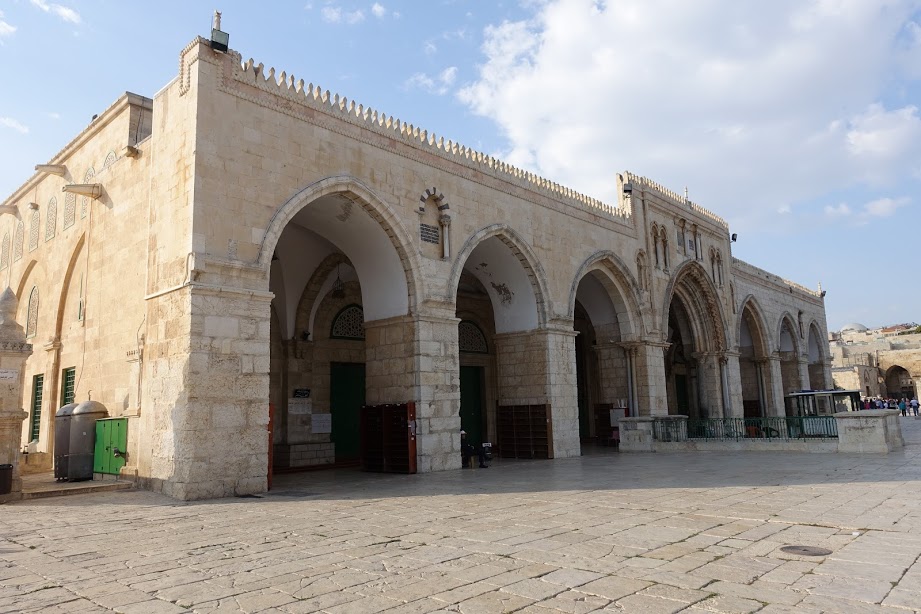
On our last day in Jerusalem, we got up very early to go to the Temple Mount to see the Dome of the Rock and the Al-Aqsa Mosque. We arrived at the Damascus gate around 7:00 AM, and the streets were virtually empty. We made sure that we got to the Temple Mount early, knowing that it wouldn’t be very crowded. The Dome of the Rock is probably one of the most beautiful buildings I have ever seen. Being a hexagon, it looks good from every possible side. The Dome of the Rock was built not too terribly long after the life of the Prophet, making it one of the oldest buildings in Islam’s history. The story goes that the Umayyads built the structure as a testament to the greatness of Islam and it’s distinctness as a religion separate from Judaism and Christianity. The Golden Dome and the exterior are part of the original structure, only undergoing occasional renovations. The beautiful tile-work is an addition by the Ottomans, who restored the site after their conquest of Jerusalem.
The empty streets of Sunday morning Jerusalem
The magnificent Dome of the Rock
The ornate tile work added by the Ottomans. The calligraphy is Turkish-style calligraphy, not Arab-style calligraphy
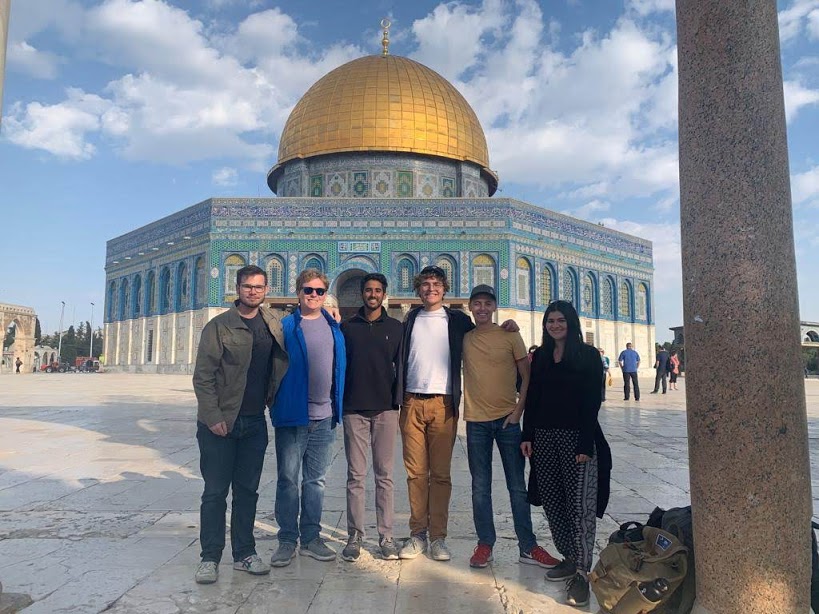
The six of us at the Dome of the Rock
The Al-Aqsa Mosque across from the Dome of the Rock on the Temple Mount
Following the Temple Mount, we embarked on our journey back across the King Hussein Bridge and back to Amman. The trip to Jerusalem marks my last trip outside of Jordan for the semester, but don’t worry, I still have a couple more adventure in the Hashemite Kingdom before December 14th. Thanks for reading!!
November 2, 2019 – On Friday, myself and two friends took a bus to the city of Al-Salt (pronounced and often romanized as As-Salt because of the intricacies of Arabic phonetics), which lies about 30 minutes West of Amman. Until the Twentieth Century, As-Salt was the largest city on the East Bank of the Jordan River. Despite the city’s size and political importance, it is not as old as Amman, with archaeologists estimating As-Salt’s founding around the time of Alexander the Great. Starting in the Sixteenth Century, the Ottomans used As-Salt as a regional capital in Palestine because of its strategic placement along trade routes to and from Nablus and Jerusalem. In 1921, Abdullah I (then the Emir of British Transjordan) chose As-Salt as his capital for a brief period of time. Alas, this was short-lived as Abdullah I moved the capital less than a year later to Amman, which at the time was a small village with a population of about 20,000.
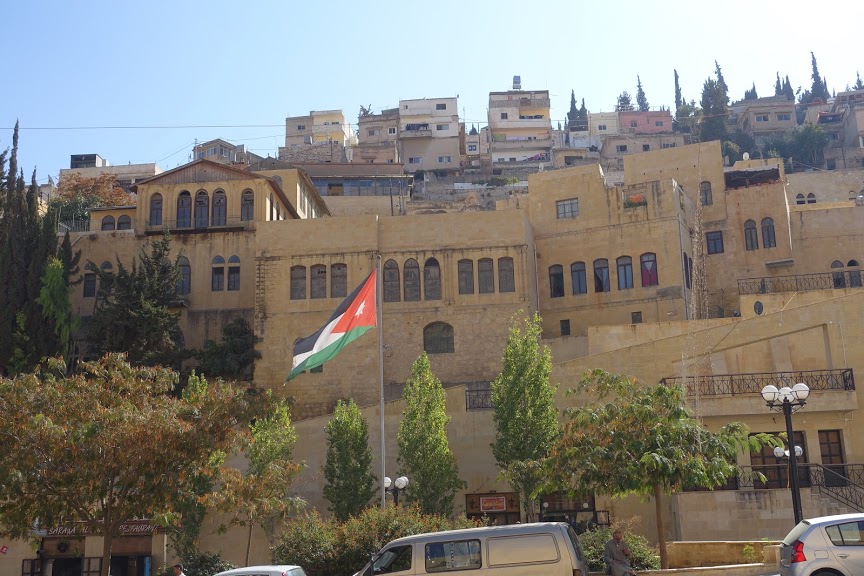
Today, As-Salt still maintains much of its Ottoman heritage in the city’s architecture. Recently, someone told me that Amman is a twentieth-century city, which I didn’t fully understand until I went to As-Salt. To explore, my friends and I followed the city’s Harmony Trail, which highlights As-Salt’s “cultural, religious, and architectural harmony.”
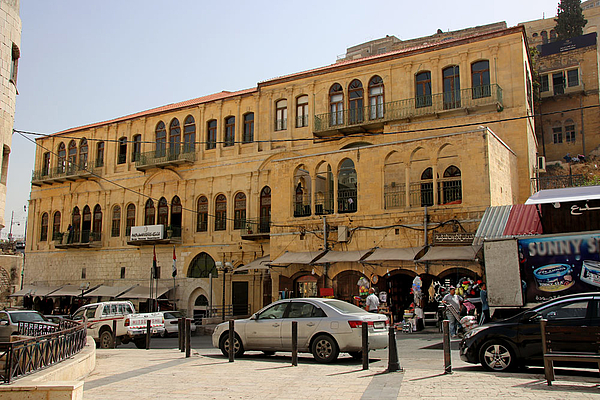
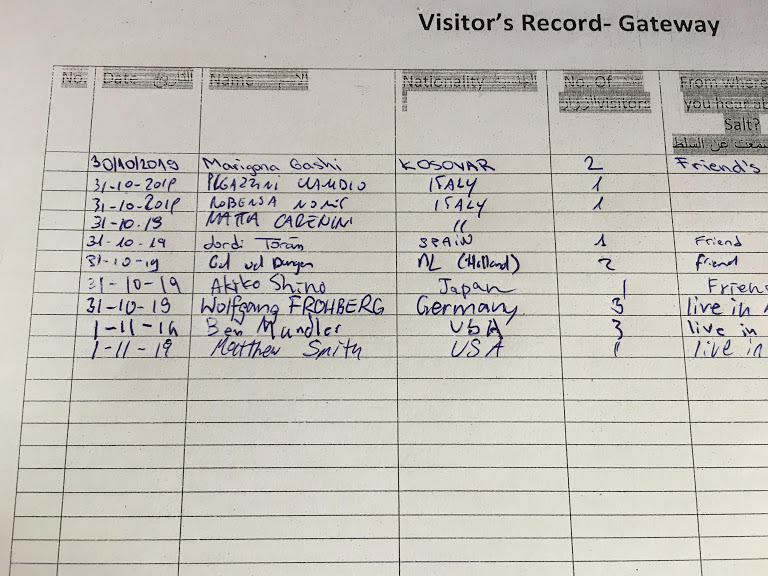
The trail begins where all journeys in As-Salt must begin: the Abu Jaber House. Beit Abu Jaber is one of the largest Ottoman-era homes in As-Salt. The multi-floor mansion now serves as the As-Salt history museum. It was here I learned that not many tourists visit As-Salt. This hidden gem is often eclipsed by larger attractions such as Petra and Aqaba.
The Abu Jaber House (this photo was actually taken from Google because I forgot to snap a photo)
The Weekly record at the Abu Jaber House. This is where I discovered that not many tourists come to visit As-Salt.
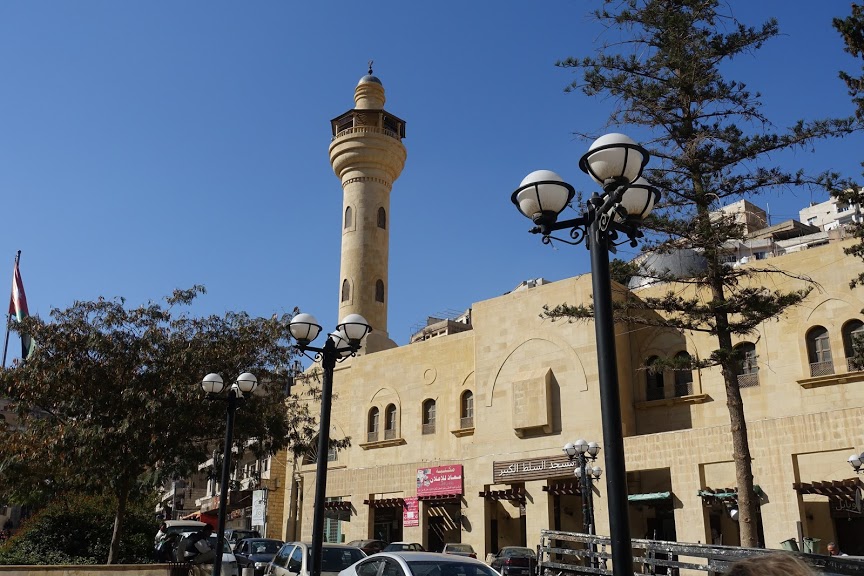
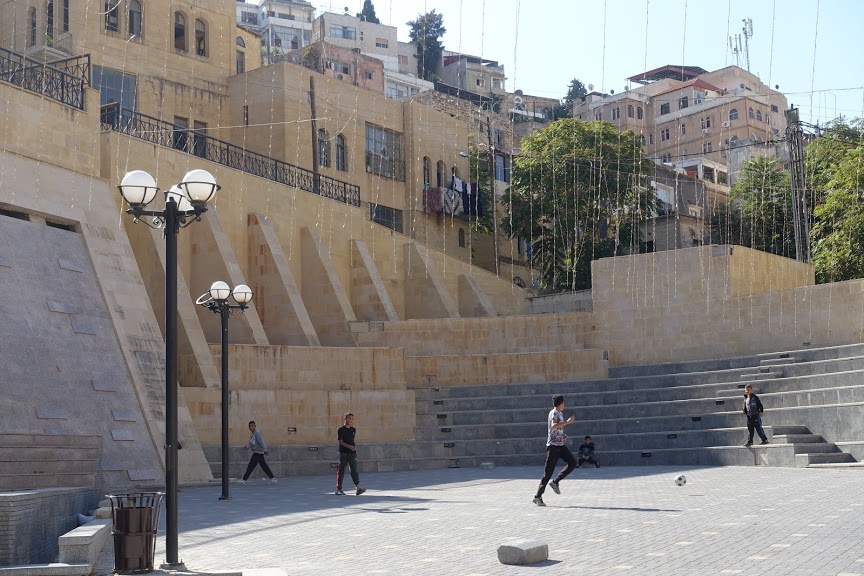
After the Abu Jaber house, the next stop was the Grand Mosque of As-Salt and As-Salt Plaza. I enjoyed the architecture around and the life in the Plaza more than the Grand Mosque.
The Old Ottoman-Era Architecture that is all over As-Salt
A pickup fútbol match in As-Salt Plaza, a typical Friday activity for these boys
The people of As-Salt are quite friendly. Being friendly and welcoming is not uncommon in Arab culture, but the residents of As-Salt were very friendly. As we journeyed through narrow streets and rocky sidewalks, we were constantly greeted with shouts of “Hello!” “How are you?!” “Welcome to Salt!” “Are you lost?” from passersby on the street or, occasionally, from the window of passing car.
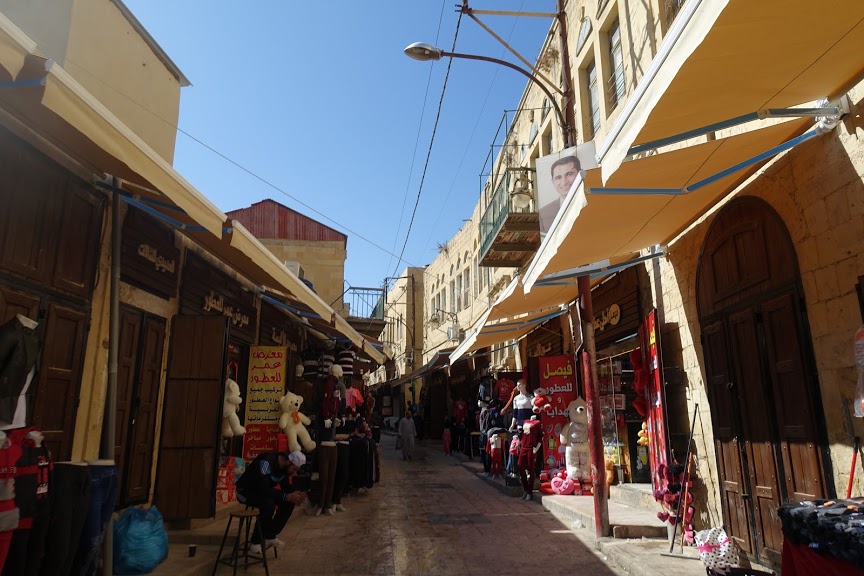
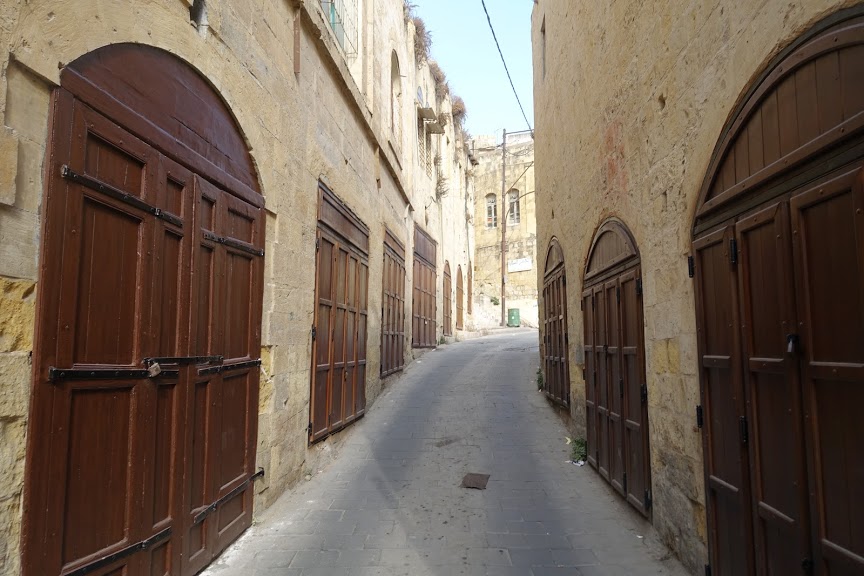
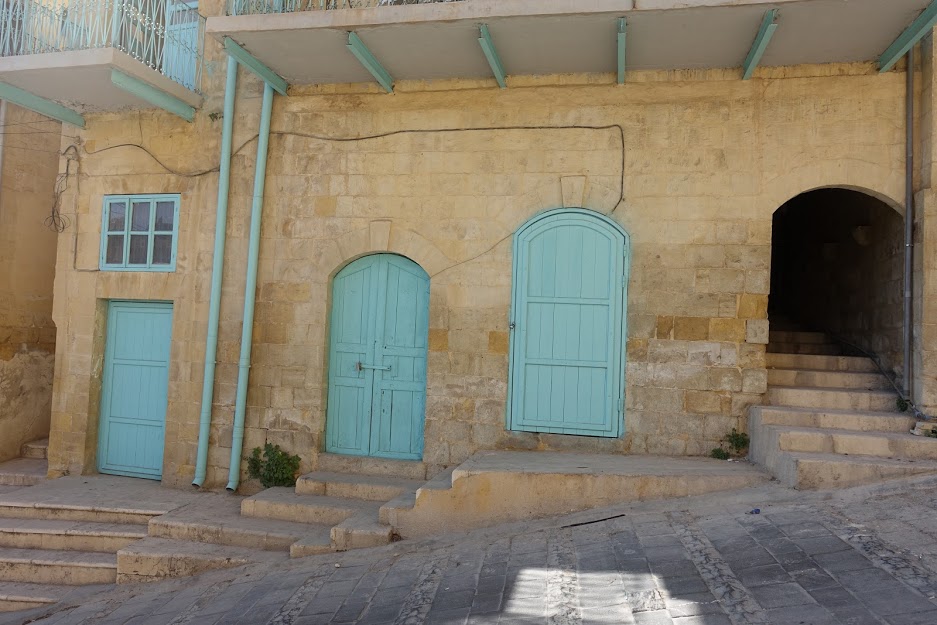
I was truly captured by As-Salt’s narrow, historic streets. As we walked from one location to the next, we would stop a few times just to admire the street and adjacent architecture.
One such narrow street between the bus station and the center of As-Salt
Most shops were closed in the morning because it was Friday
These doors, near the St. George Orthodox Church, drew me in because of their color. The light blue stood out against the sandy blocks and stone street
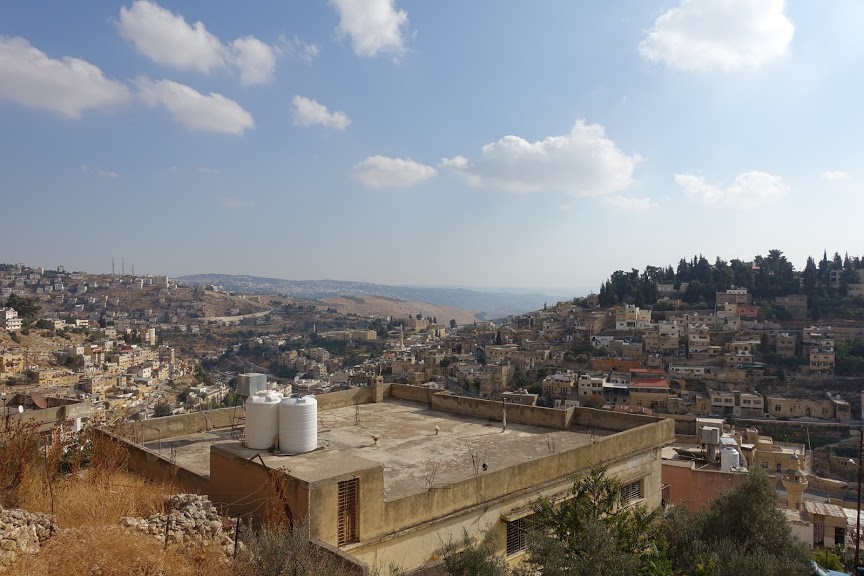
Our one of goal of the day was to reach the Al-Qala’a Lookout at the top of the highest hill in As-Salt. This involves hiking up several sets of uneven stairs from the main street of As-Salt. On this particularly warm November day, we took a break about halfway to the top, where we spent 10 minutes talking to some kids who were very excited to tell us their names and ages in English. From the Lookout, the sandy colored houses of As-Salt looked like small blocks stacked one on top of another. On clear days, it’s possible to see all the way to the West Bank, as As-Salt is only 35 miles from Jerusalem and 25 miles from Nablus.
The view from the Al-Qala’a Lookout
On our way home, we decided that, with the remaining 6 weeks we have in Amman, we want make different day trips to places we still have not visited in Jordan. As the weather becomes colder, I realize that my time in Amman is growing short, but I plan to fill the next 6 weeks with as many adventures as possible.

 Reports and Reflections from Life Abroad