October 14, 2019 – Last week was midterms which mean this week was the something we’ve all been waiting for: fall break! My friends and I packed up and headed to Oman. Oman is a gorgeous country on the Gulf that is relatively unknown by Western tourists.
A brief history of Oman: Oman has been inhabited since prehistory, and a distinct Arab culture has developed over millennia. After the fall of the Umayyad Caliphate, the Omanis established the Imamate of Oman as their first Islamic system of government. After a period of being ruled by the Nabhani Dynasty, the Portuguese captured Muscat and controlled it and other coastal cities until the Ottomans reconquered them in the 16th century. Following the reconquest of Muscat, the Omanis established a large trading empire from Bahrain to Mozambique. For a short period of time, the Sultan moved the capital of Oman to Stone Town, Zanzibar. After almost a century of British protectorate status, Oman became an independent state in 1951, with the modern Sultanate of Oman being established in 1970.
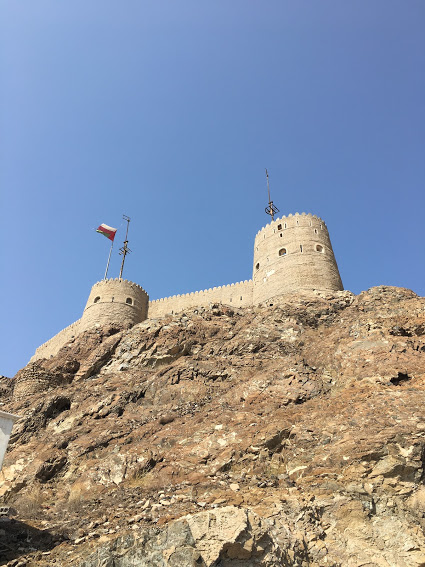
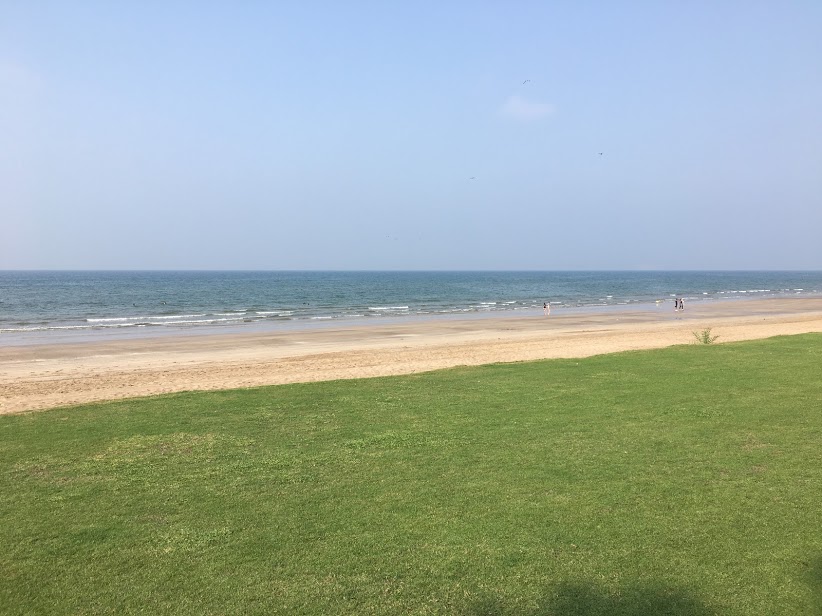
Our first day in Muscat was a beach day. We slept in, had an amazing lunch by the beach, and then relaxed the rest of the day. We even met some Egyptians on the beach and spent the day with them!
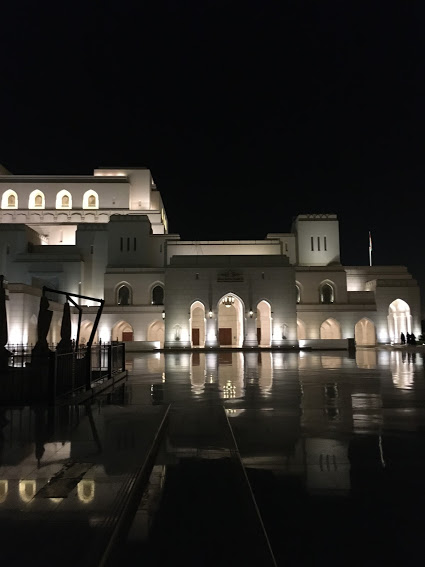
That night, we went to see the Royal Opera House, one of Oman’s most famous attractions, at night. The views were astounding, and the marble floors are kept immaculate by staff that works around the clock to keep them clean. It truly shows the wealth that Oman’s oil brings to its economy.
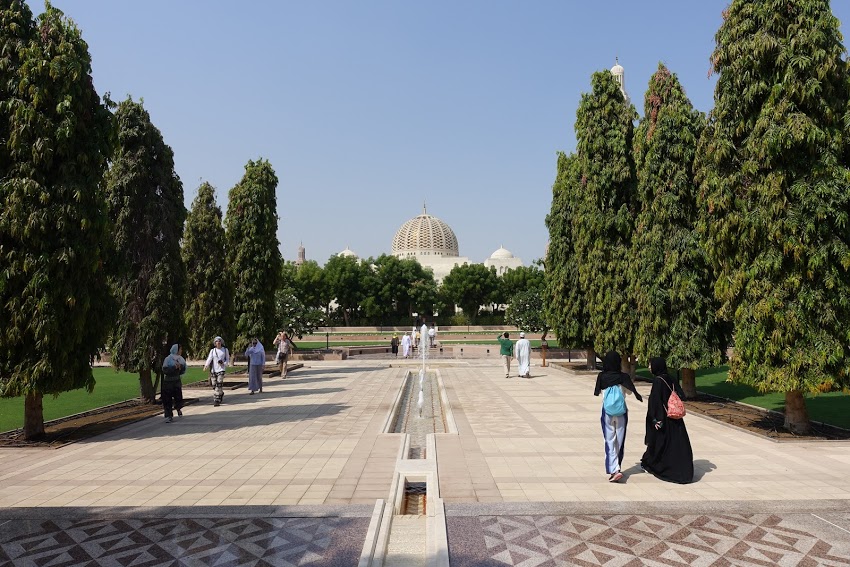
The following day, we did more sightseeing around Muscat. Our first stop was the Grand Mosque of Sultan Qaboos. The Sultan Qaboos Mosque is probably one of the most beautiful structures I have ever been inside of. The Mosque’s construction began in 1993, and it opened for worship in 2001. One of the largest Mosques in the Arab World, it can hold 20,000 worshipers. When you enter the Mosque, it’s sandstone and marble structures glitter and shine with the sun. The garden also provides a quiet, calming place to meditate and observe the amazing architecture.
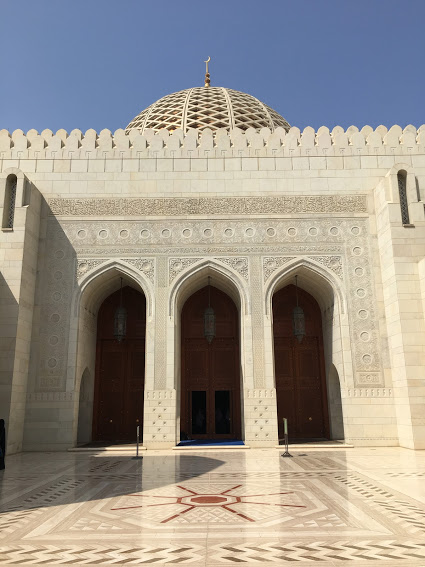
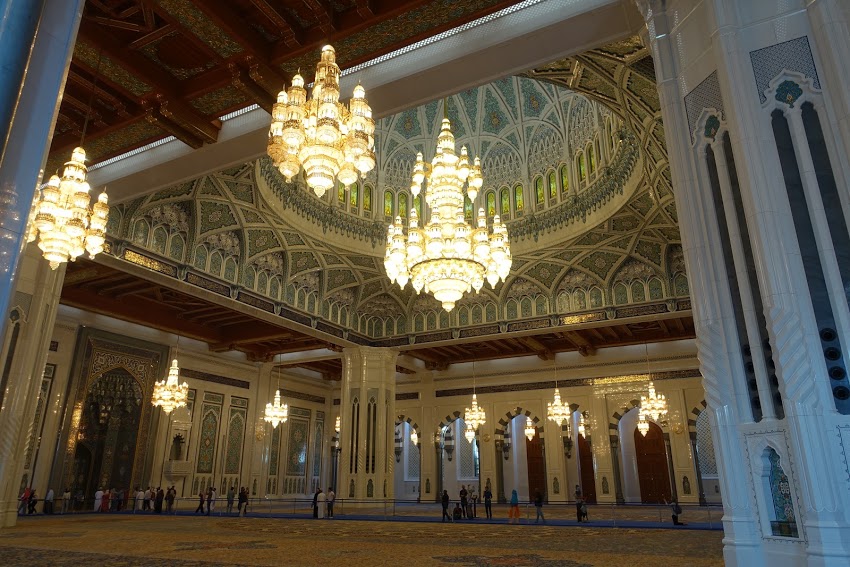
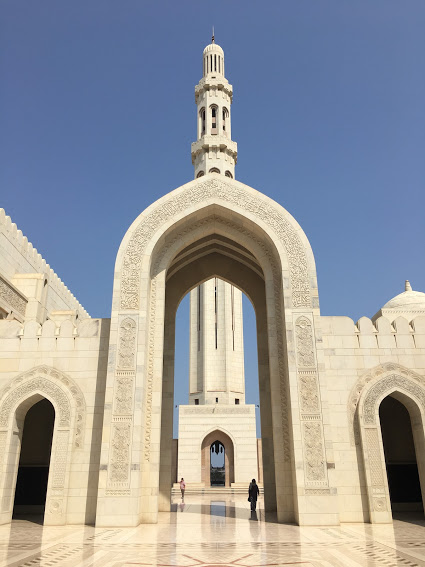
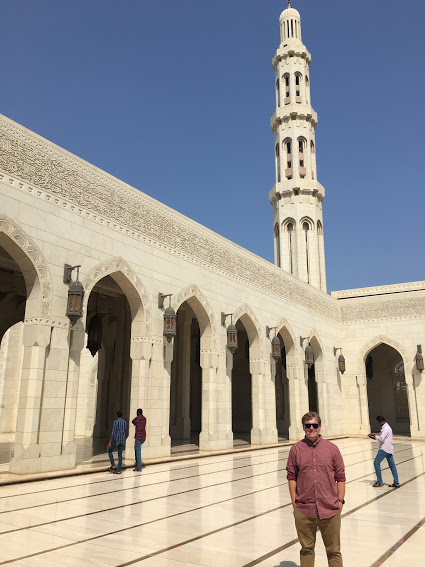
After the Mosque, we used our rented car to get across the city to the older district of Muscat: Muttrah. Muttrah houses the Al-Alam Palace, the National Museum of Oman, and the Muttrah Souq. The Al-Alam Palace is the traditional place of the Sultan of Oman. Today, it is used to house official state visits.
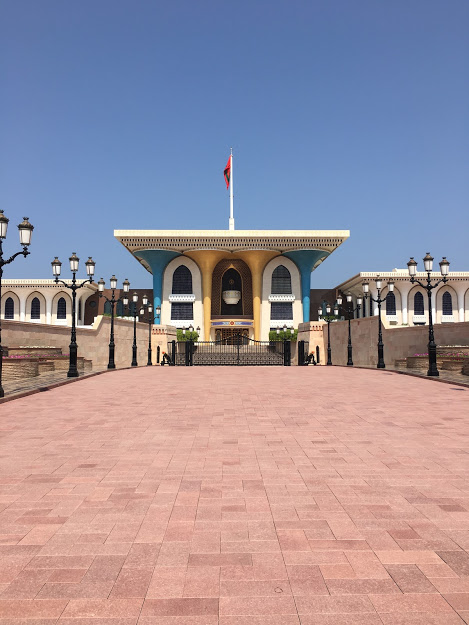
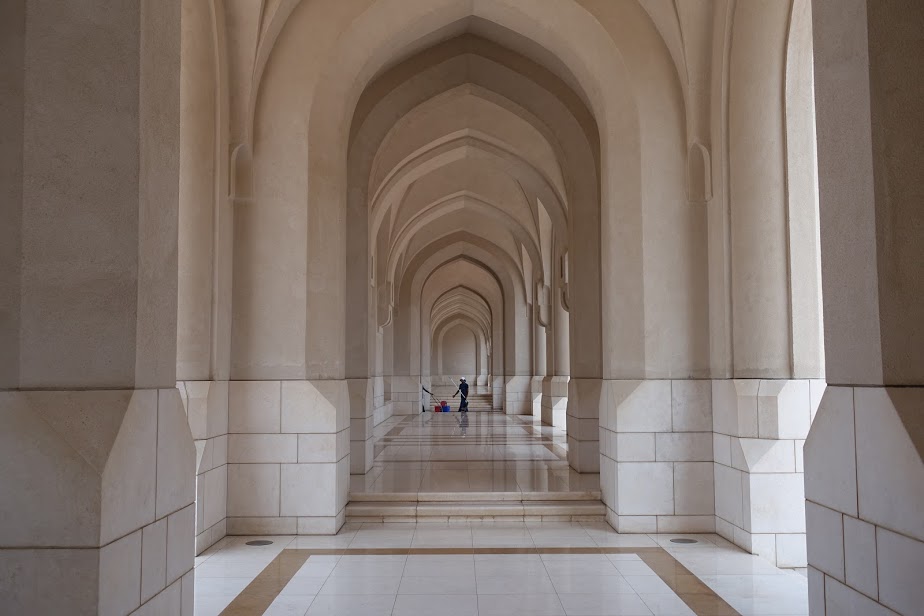
On the walk from the palace to the museum, I stopped to take a picture of Oman amazing architecture, employing the use of arches, sandstone, and marble. I don’t know why, but something about it makes you stop and just observe its majesty in silent awe.
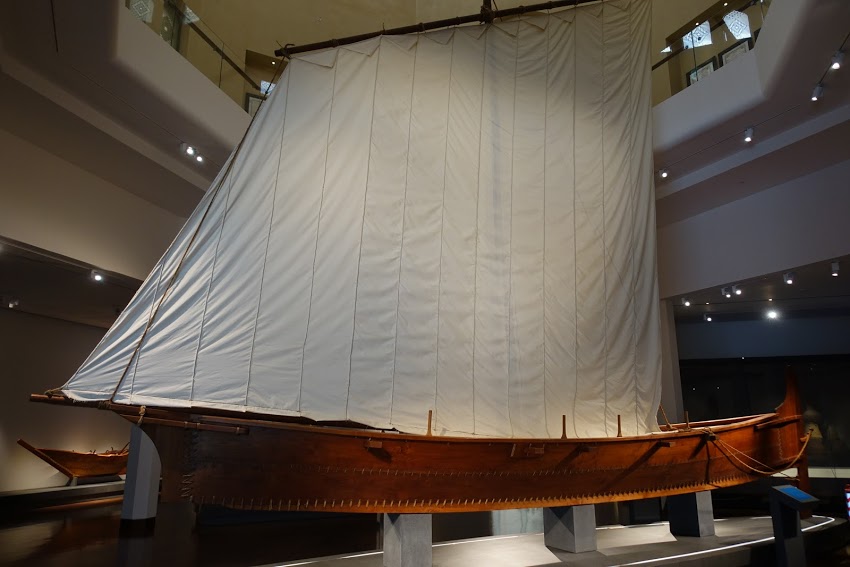
The National Museum of Oman holds many exhibits on Oman’s rich history and its relations with outside nations. I won’t bore you with the details or photos of the exhibits, but the exhibit on Oman’s maritime history. Oman’s greatness was possible because of its strong commercial naval power in the Gulf of Oman. In the center of the exhibit hall, the museum displays a replica of a ship built and used in Oman during its earliest days of maritime trading.
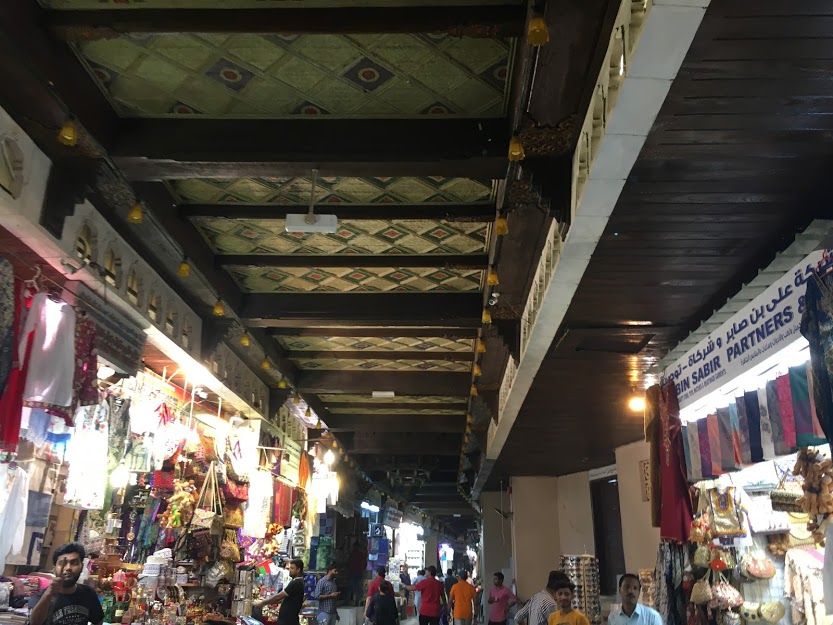
Our final stop of the day was the Muttrah Souq. The Souq is believed to be one of the oldest in the Arab world, and currently houses many shops that sell everything from Omani incense and daggers to everyday items like paper and dates. It’s easy (and fun) to get lost in the Souq, and explore all it has to offer.
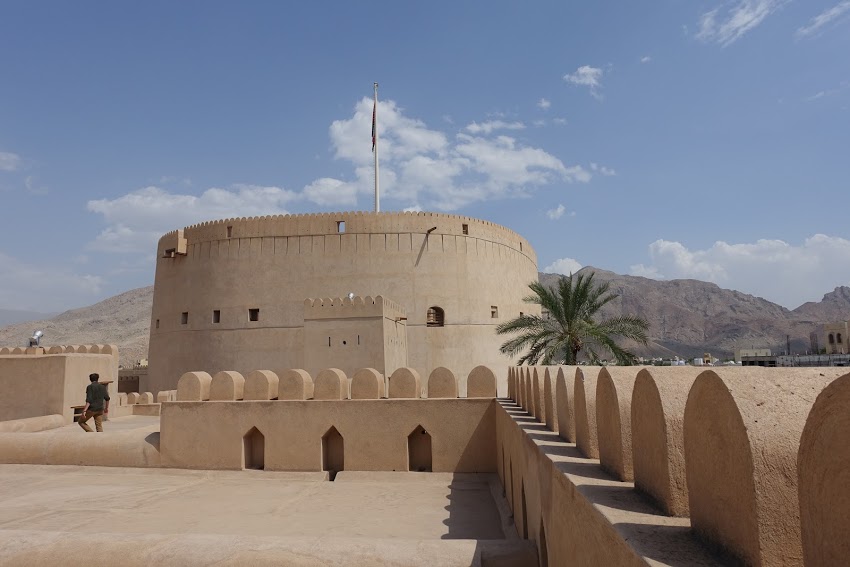
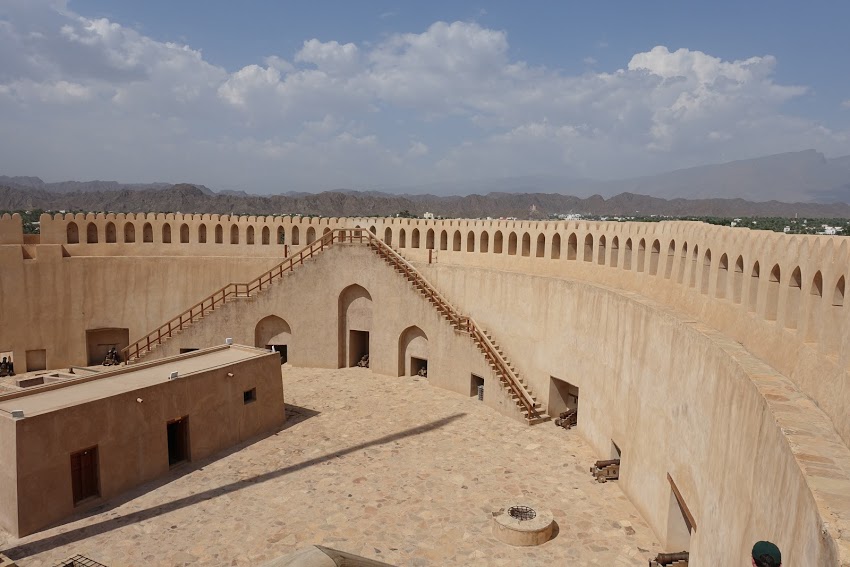
The next day we drove to Nizwa to tour the fort and castle there. The Nizwa Fort dates back to 17th century, and was actively used as a military fort until the 1980s. The fort features more of Oman’s amazing architecture, with beautiful sandstone, and high vantage points to view the city.
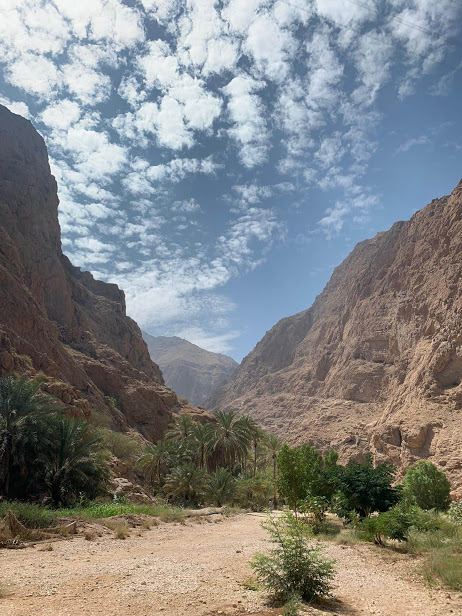
Today, we traveled down south to Wadi al-Shab and the Bimmah Sinkhole. Our roadtrip soundtrack featured some of history’s greatest hits including Rick Astley’s Never Gonna Give You Up, John Denver’s Take Me Home, Country Roads, and Phil Collins’s In the Air Tonight. Wadi Al-Shab (literally “Valley of the Young Man”), has some of the most beautiful nature I’ve ever seen.
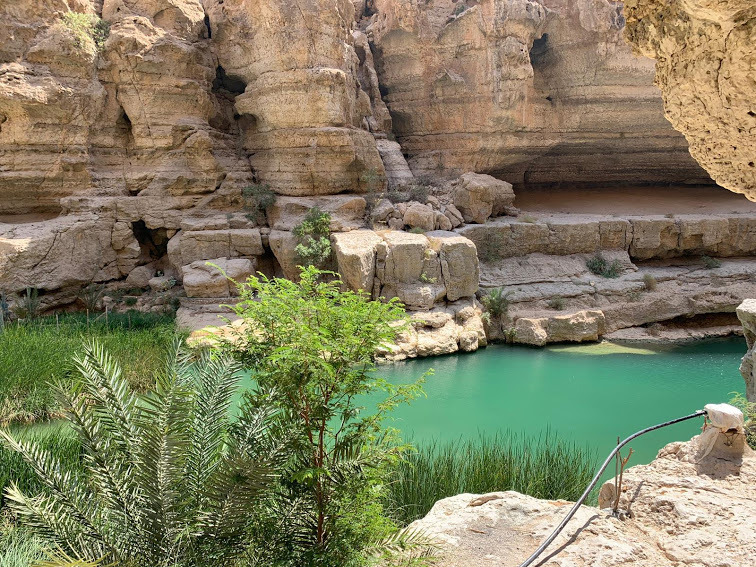
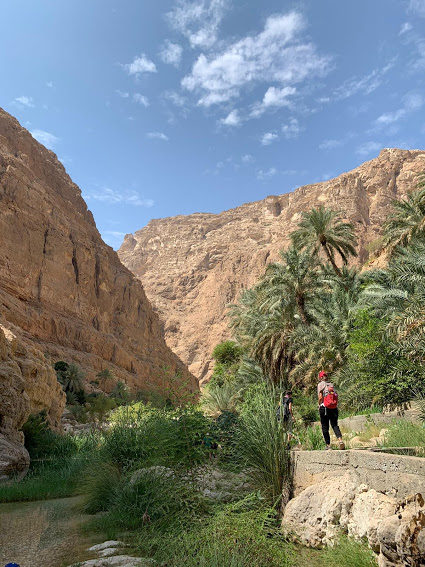
The Bimmah Sinkhole is a natural sinkhole 20 minutes away from Wadi Al-Shab. Visitors are allowed to swim in the sinkhole for free, so why wouldn’t we take the opportunity?!
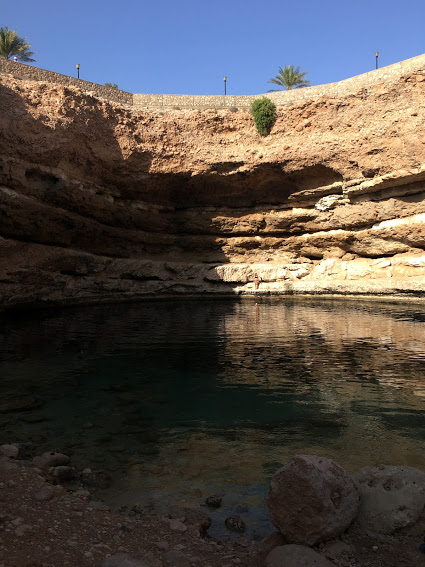
Now I’m back in my Airbnb in Muscat. I’m so excited to see what the rest of this trip has in store, check back soon for another update!
-Matt
 Reports and Reflections from Life Abroad